Birdr

Common Rosefinch vs Trumpeter Finch

Carpodacus erythrinus versus Bucanetes githagineus

Play a quiz with Common Rosefinch and Trumpeter Finch
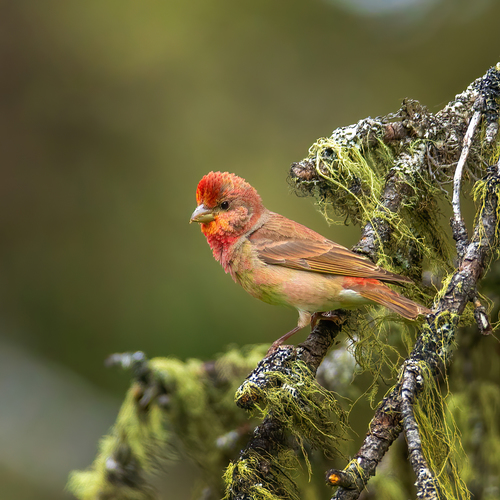
Common Rosefinch (Carpodacus erythrinus) Common Rosefinch
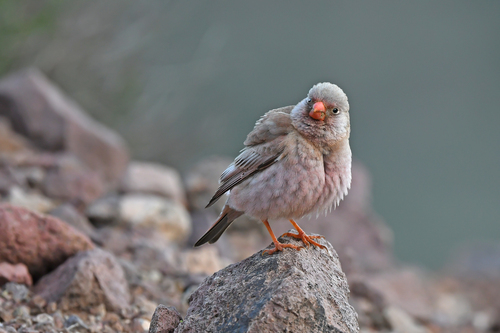
Trumpeter Finch (Bucanetes githagineus) Trumpeter Finch

Media

Loading…

In short

The bill shape is the most reliable field mark: the Common Rosefinch has a thicker, more conical bill, while the Trumpeter Finch has a more slender, slightly downcurved bill. Both species can show red plumage, but the Rosefinch's red is more extensive and vibrant in males. Habitat preferences also differ significantly, aiding identification.

Identification tips

  1. Bill shape: Look for the thicker, conical bill of the Common Rosefinch versus the slender, slightly downcurved bill of the Trumpeter Finch. 2. Plumage: Note the vibrant red of male Common Rosefinches compared to the more subtle pink wash on male Trumpeter Finches. 3. Habitat: Consider the environment; Rosefinches are in wooded or scrubby areas, while Trumpeter Finches prefer arid, open landscapes. 4. Vocalizations: Listen for the melodic song of the Rosefinch versus the nasal call of the Trumpeter Finch.

Size

Both species are similar in size, but the Trumpeter Finch may appear slightly more compact due to its shorter tail.

Plumage

Male Common Rosefinches are a vibrant red with brownish wings and back, while female and immature birds are brownish with streaking. Trumpeter Finches have a more uniform sandy or pinkish tone, with males showing a subtle pink wash on the face and breast.

Behaviour

Both species are often seen in flocks, but Trumpeter Finches are more likely to be observed feeding on the ground in arid environments.

Habitat

Common Rosefinches prefer woodland edges, gardens, and scrubby areas, often near water. In contrast, Trumpeter Finches are found in arid, rocky, or sandy environments, such as deserts and semi-deserts.

Voice

The Common Rosefinch has a distinctive, melodic song often described as a series of 'pleased to meet you' phrases, while the Trumpeter Finch's call is a nasal, trumpet-like 'whee'.

Submit a better description

Use the same sections as the comparison. Your text is published immediately.

The bill shape is the most reliable field mark: the Common Rosefinch has a thicker, more conical bill, while the Trumpeter Finch has a more slender, slightly downcurved bill. Both species can show red plumage, but the Rosefinch's red is more extensive and vibrant in males. Habitat preferences also differ significantly, aiding identification.

  1. Bill shape: Look for the thicker, conical bill of the Common Rosefinch versus the slender, slightly downcurved bill of the Trumpeter Finch. 2. Plumage: Note the vibrant red of male Common Rosefinches compared to the more subtle pink wash on male Trumpeter Finches. 3. Habitat: Consider the environment; Rosefinches are in wooded or scrubby areas, while Trumpeter Finches prefer arid, open landscapes. 4. Vocalizations: Listen for the melodic song of the Rosefinch versus the nasal call of the Trumpeter Finch.

Both species are similar in size, but the Trumpeter Finch may appear slightly more compact due to its shorter tail.

Male Common Rosefinches are a vibrant red with brownish wings and back, while female and immature birds are brownish with streaking. Trumpeter Finches have a more uniform sandy or pinkish tone, with males showing a subtle pink wash on the face and breast.

Both species are often seen in flocks, but Trumpeter Finches are more likely to be observed feeding on the ground in arid environments.

Common Rosefinches prefer woodland edges, gardens, and scrubby areas, often near water. In contrast, Trumpeter Finches are found in arid, rocky, or sandy environments, such as deserts and semi-deserts.

The Common Rosefinch has a distinctive, melodic song often described as a series of 'pleased to meet you' phrases, while the Trumpeter Finch's call is a nasal, trumpet-like 'whee'.

Discard your changes?

You have unsaved edits. If you leave now, those changes will be lost.

Common Rosefinch · Trumpeter Finch · My Tricky Birds