Birdr

Common Scoter vs Common Goldeneye

Melanitta nigra versus Bucephala clangula

Play a quiz with Common Scoter and Common Goldeneye
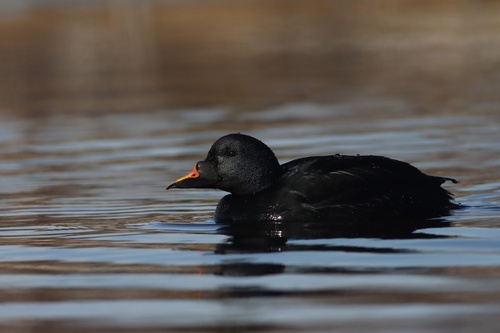
Common Scoter (Melanitta nigra) Common Scoter
Common Goldeneye (Bucephala clangula) Common Goldeneye

Media

Loading…

In short

The Common Scoter and Common Goldeneye can be distinguished by their plumage and bill features. The Common Scoter is predominantly sooty black with a yellow patch on the bill, while the Common Goldeneye has distinctive white facial patches and a more contrasting plumage. Both species are sea ducks but differ in their vocalizations and habitat preferences.

Identification tips

Size

Common Scoter is larger, with a wingspan of 79–90 cm, compared to the Common Goldeneye, which is generally smaller.

Plumage

Male Common Scoter is sooty black with a yellow patch on the culmen, whereas the male Common Goldeneye has a black head with a white cheek patch and a contrasting white body. Female Common Scoter is duller brown, while the female Goldeneye has a brown head with a greyish body.

Behaviour

Common Scoter has a light, fast, and direct flight with a long-necked appearance on water. Common Goldeneye often displays a rapid wingbeat and is known for its distinctive head-bobbing courtship display.

Habitat

Common Scoter is typically found at sea, while the Common Goldeneye is more often seen on freshwater lakes and rivers, especially during the breeding season.

Voice

Common Scoter is usually silent but can produce thin, piping whistles. Common Goldeneye males make a distinctive whistling sound with their wings during flight.

Submit a better description

Use the same sections as the comparison. Your text is published immediately.

The Common Scoter and Common Goldeneye can be distinguished by their plumage and bill features. The Common Scoter is predominantly sooty black with a yellow patch on the bill, while the Common Goldeneye has distinctive white facial patches and a more contrasting plumage. Both species are sea ducks but differ in their vocalizations and habitat preferences.

  • Bill and Head: Look for the yellow patch on the Common Scoter's bill, absent in the Goldeneye.
  • Facial Markings: Common Goldeneye has a white cheek patch, which is absent in the Scoter.
  • Plumage Contrast: Goldeneye males have a striking contrast between the black head and white body.
  • Habitat: Consider the habitat; Scoters are more marine, while Goldeneyes prefer freshwater.
  • Vocalization: Listen for the wing whistle of Goldeneyes in flight.

Common Scoter is larger, with a wingspan of 79–90 cm, compared to the Common Goldeneye, which is generally smaller.

Male Common Scoter is sooty black with a yellow patch on the culmen, whereas the male Common Goldeneye has a black head with a white cheek patch and a contrasting white body. Female Common Scoter is duller brown, while the female Goldeneye has a brown head with a greyish body.

Common Scoter has a light, fast, and direct flight with a long-necked appearance on water. Common Goldeneye often displays a rapid wingbeat and is known for its distinctive head-bobbing courtship display.

Common Scoter is typically found at sea, while the Common Goldeneye is more often seen on freshwater lakes and rivers, especially during the breeding season.

Common Scoter is usually silent but can produce thin, piping whistles. Common Goldeneye males make a distinctive whistling sound with their wings during flight.

Discard your changes?

You have unsaved edits. If you leave now, those changes will be lost.

Common Scoter · Common Goldeneye · My Tricky Birds