Birdr

Common Shelduck vs Muscovy Duck

Tadorna tadorna versus Cairina moschata

Play a quiz with Common Shelduck and Muscovy Duck

Common Shelduck (Tadorna tadorna) Common Shelduck
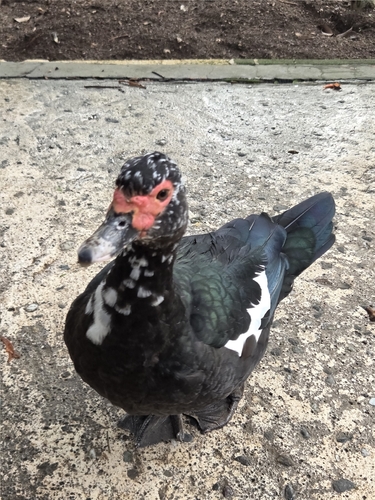
Muscovy Duck (Cairina moschata) Muscovy Duck

Media

Loading…

In short

The Common Shelduck and Muscovy Duck can be distinguished by size, plumage, and behavior. The Common Shelduck is smaller and more colorful, while the Muscovy Duck is larger and often found in domestic settings. Observing their habitat and behavior can also aid in identification.

Identification tips

Size and plumage: Look for the smaller, more colorful Common Shelduck with its red bill versus the larger Muscovy Duck with variable plumage and red facial skin. Behavior: Note the arboreal habits of Muscovy Ducks compared to the more terrestrial Common Shelduck. Habitat: Consider the setting; Common Shelducks in wetlands versus Muscovy Ducks in more urban or park-like environments.

Size

The Muscovy Duck is significantly larger than the Common Shelduck, with males being particularly large.

Plumage

Common Shelducks have a striking black, white, and chestnut plumage with a distinctive red bill. Muscovy Ducks, especially domestic types, vary widely but often have a more subdued plumage with a prominent red facial skin.

Behaviour

Muscovy Ducks are partially arboreal, often roosting in trees and nesting in tree cavities, while Common Shelducks are more terrestrial and often found in open wetlands.

Habitat

Common Shelducks are typically found in coastal and inland wetlands, while Muscovy Ducks, especially domestic types, are often seen in parks and urban areas.

Voice

Common Shelducks are generally quieter, while Muscovy Ducks can be more vocal with a variety of hisses and grunts.

Submit a better description

Use the same sections as the comparison. Your text is published immediately.

The Common Shelduck and Muscovy Duck can be distinguished by size, plumage, and behavior. The Common Shelduck is smaller and more colorful, while the Muscovy Duck is larger and often found in domestic settings. Observing their habitat and behavior can also aid in identification.

Size and plumage: Look for the smaller, more colorful Common Shelduck with its red bill versus the larger Muscovy Duck with variable plumage and red facial skin. Behavior: Note the arboreal habits of Muscovy Ducks compared to the more terrestrial Common Shelduck. Habitat: Consider the setting; Common Shelducks in wetlands versus Muscovy Ducks in more urban or park-like environments.

The Muscovy Duck is significantly larger than the Common Shelduck, with males being particularly large.

Common Shelducks have a striking black, white, and chestnut plumage with a distinctive red bill. Muscovy Ducks, especially domestic types, vary widely but often have a more subdued plumage with a prominent red facial skin.

Muscovy Ducks are partially arboreal, often roosting in trees and nesting in tree cavities, while Common Shelducks are more terrestrial and often found in open wetlands.

Common Shelducks are typically found in coastal and inland wetlands, while Muscovy Ducks, especially domestic types, are often seen in parks and urban areas.

Common Shelducks are generally quieter, while Muscovy Ducks can be more vocal with a variety of hisses and grunts.

Discard your changes?

You have unsaved edits. If you leave now, those changes will be lost.

Common Shelduck · Muscovy Duck · My Tricky Birds