Common Shelduck vs Northern Shoveler
Tadorna tadorna versus Spatula clypeata
Play a quiz with Common Shelduck and Northern Shoveler
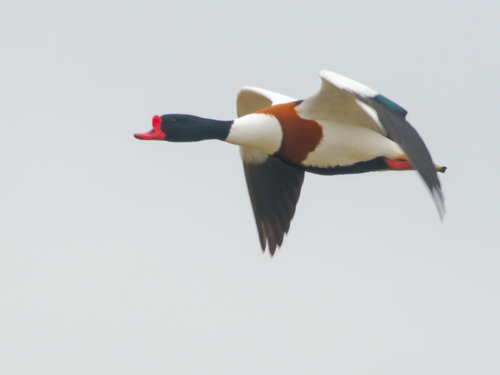
Common Shelduck
Northern Shoveler
In short
The Common Shelduck and Northern Shoveler can be distinguished by their bill shape and plumage patterns. The Shelduck has a distinctive red bill and bold white, black, and chestnut plumage, while the Shoveler features a large, spatula-shaped bill and a more muted color pattern with a green head in males.
Identification tips
- Bill Shape: Look for the Shelduck's red bill versus the Shoveler's large, spatula-shaped bill.
- Plumage: Note the Shelduck's bold white and chestnut pattern compared to the Shoveler's more subdued colors.
- Size: The Shelduck is larger and more robust.
- Habitat: Consider the habitat; Shelducks are more coastal, while Shovelers prefer freshwater wetlands.
Size
The Common Shelduck is larger and more robust compared to the more compact Northern Shoveler.
Plumage
Common Shelduck has a striking plumage with a white body, black wings, and a chestnut band across the chest. In contrast, the male Northern Shoveler has a green head, white chest, and rusty sides, while females are mottled brown.
Behaviour
Both species are dabbling ducks, but the Northern Shoveler is known for its unique feeding behavior, using its large bill to sift through water for food.
Habitat
Common Shelducks are often found in coastal areas and estuaries, while Northern Shovelers prefer freshwater wetlands, including marshes and ponds.
Voice
Vocalizations are not a primary distinguishing feature between these species in the field.