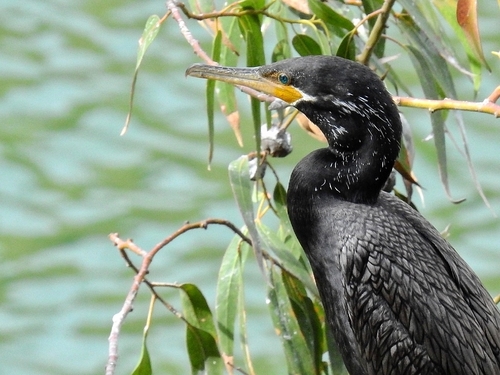
Common Squirrel-Cuckoo vs Neotropic Cormorant
Piaya cayana versus Nannopterum brasilianum
Play a quiz with Common Squirrel-Cuckoo and Neotropic Cormorant

Common Squirrel-Cuckoo
Neotropic Cormorant
In short
The Common Squirrel-Cuckoo and Neotropic Cormorant are easy to distinguish by their habitat and behavior. The Squirrel-Cuckoo is a slender, long-tailed bird often found in forests, while the Neotropic Cormorant is a waterbird seen near bodies of water. Their plumage and structure are also markedly different.
Identification tips
- Habitat: Look for the Squirrel-Cuckoo in forests and the Cormorant near water. 2. Behavior: Note the Squirrel-Cuckoo's tree-hopping versus the Cormorant's diving. 3. Plumage: Observe the Squirrel-Cuckoo's rufous color and long tail compared to the Cormorant's dark, sleek appearance. 4. Vocalization: Listen for the Squirrel-Cuckoo's call; the Cormorant is usually silent.
Size
The Common Squirrel-Cuckoo is a medium-sized bird with a long tail, while the Neotropic Cormorant is larger and more robust, typical of cormorants.
Plumage
The Common Squirrel-Cuckoo has a rufous body with a long, graduated tail and white tips, whereas the Neotropic Cormorant is dark overall with a slender neck and hooked bill.
Behaviour
The Squirrel-Cuckoo is arboreal, often seen hopping through trees, while the Neotropic Cormorant is aquatic, diving for fish and often seen swimming or perched near water.
Habitat
Common Squirrel-Cuckoos inhabit forests and wooded areas, while Neotropic Cormorants are found near lakes, rivers, and coastal waters.
Voice
The Common Squirrel-Cuckoo has a distinctive, repetitive call, while the Neotropic Cormorant is generally silent.
Common Squirrel-Cuckoo · Neotropic Cormorant · My Tricky Birds