
Common Swift vs Plain Swift
Apus apus versus Apus unicolor
Play a quiz with Common Swift and Plain Swift
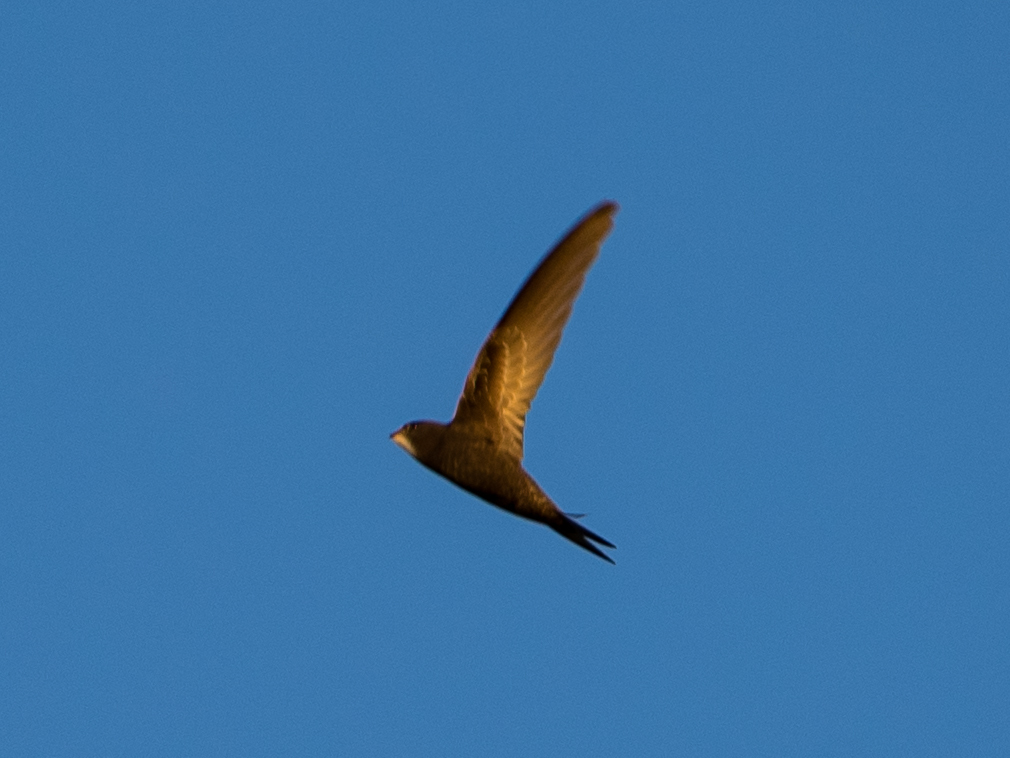 Common Swift
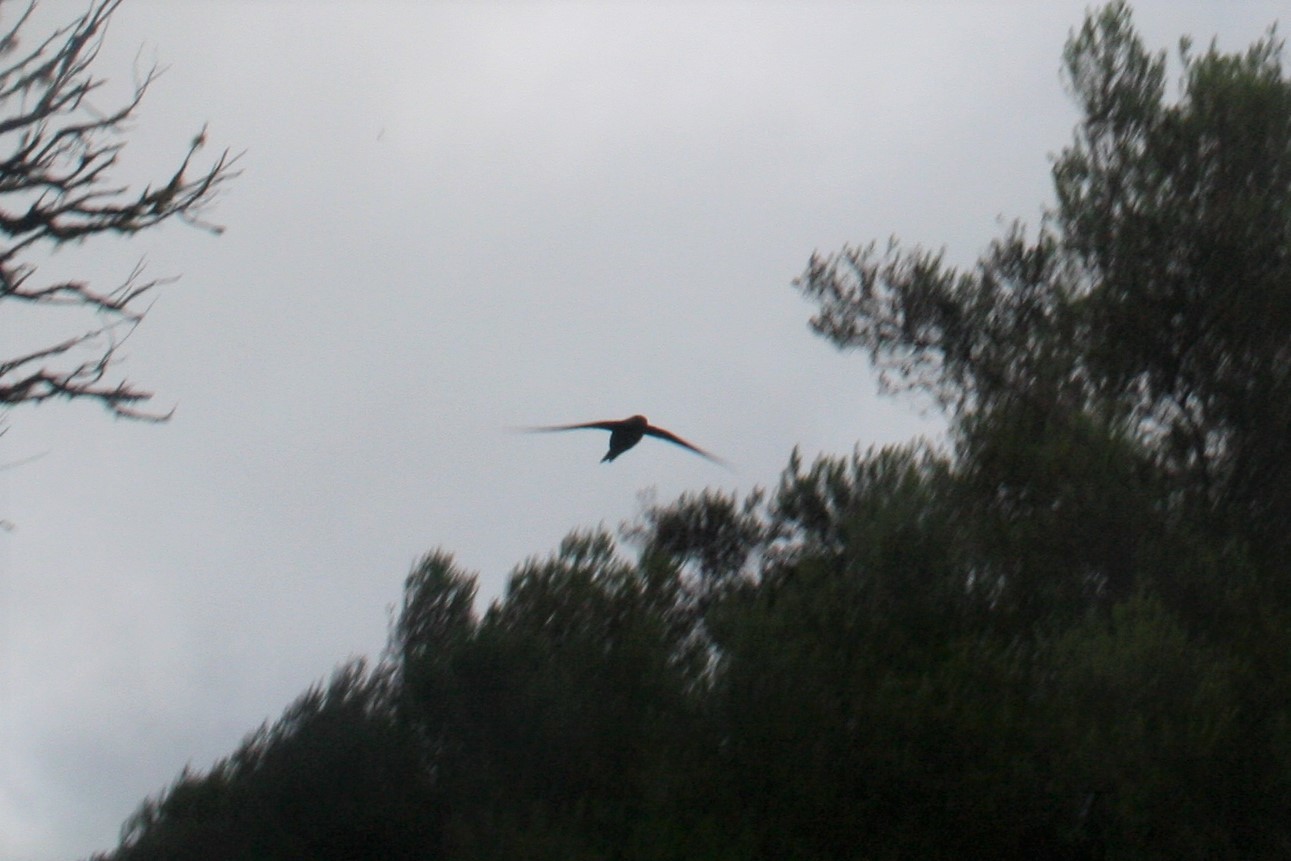 Plain Swift
In short
Common Swift and Plain Swift are both dark, fast-flying swifts with similar silhouettes, but they can be distinguished by subtle differences in plumage and range. Common Swifts have a slightly larger size and a more pronounced forked tail compared to the Plain Swift.
Identification tips
- Size and Tail Shape: Look for the slightly larger size and more pronounced forked tail of the Common Swift. 2. Throat Patch: Check for the presence of a small off-white throat patch on the Common Swift, absent in the Plain Swift. 3. Range: Consider the location; if in the Canary Islands or Madeira, it is more likely to be a Plain Swift. 4. Flight Behavior: Observe flight patterns; both are highly aerial, but Common Swifts may be seen over a broader range of habitats.
Size
Common Swift is slightly larger, with a wingspan of 42–48 cm, whereas the Plain Swift is generally smaller.
Plumage
Common Swift has a black-brown body with a small off-white throat patch, while the Plain Swift is uniformly dark without a distinct throat patch. The Common Swift may show slightly paler inner wings and rump, which is less pronounced in the Plain Swift.
Behaviour
Both species are highly aerial, spending most of their time in flight. Common Swifts are known to remain airborne for extended periods, even during non-breeding seasons.
Habitat
Common Swifts have a wide range, found across Europe, Asia, and Africa, often in temperate to boreal zones. Plain Swifts are more localized, primarily found in the Canary Islands and Madeira.
Voice
Vocalizations are not a reliable distinguishing feature between these two species, as both produce similar high-pitched calls.