Birdr

Common Whitethroat vs Chestnut Bunting

Curruca communis versus Emberiza rutila

Play a quiz with Common Whitethroat and Chestnut Bunting
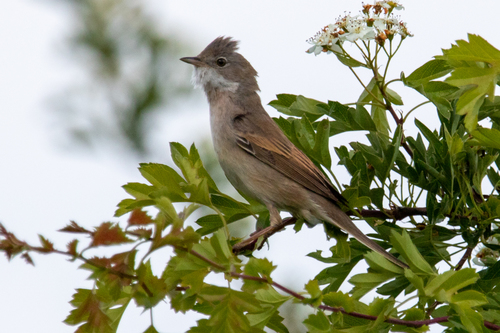
Common Whitethroat (Curruca communis) Common Whitethroat
Chestnut Bunting (Emberiza rutila) Chestnut Bunting

Media

Loading…

In short

The Common Whitethroat and Chestnut Bunting can be distinguished primarily by their plumage and structure. The Whitethroat has a more slender build with a longer tail, while the Chestnut Bunting is more robust with distinctive chestnut coloring.

Identification tips

Look for the chestnut plumage on the Chestnut Bunting, particularly on the head and breast, which is absent in the Common Whitethroat. The Whitethroat's grey head and white throat are key distinguishing features.

Plumage

The Common Whitethroat typically has a grey head, white throat, and brown back, whereas the Chestnut Bunting is noted for its chestnut-colored plumage, especially on the head and breast. The Whitethroat lacks the vibrant chestnut tones of the Bunting.

Submit a better description

Use the same sections as the comparison. Your text is published immediately.

The Common Whitethroat and Chestnut Bunting can be distinguished primarily by their plumage and structure. The Whitethroat has a more slender build with a longer tail, while the Chestnut Bunting is more robust with distinctive chestnut coloring.

Look for the chestnut plumage on the Chestnut Bunting, particularly on the head and breast, which is absent in the Common Whitethroat. The Whitethroat's grey head and white throat are key distinguishing features.

The Common Whitethroat typically has a grey head, white throat, and brown back, whereas the Chestnut Bunting is noted for its chestnut-colored plumage, especially on the head and breast. The Whitethroat lacks the vibrant chestnut tones of the Bunting.

Discard your changes?

You have unsaved edits. If you leave now, those changes will be lost.

Common Whitethroat · Chestnut Bunting · My Tricky Birds