Birdr

Common Whitethroat vs Dartford Warbler

Curruca communis versus Curruca undata

Play a quiz with Common Whitethroat and Dartford Warbler
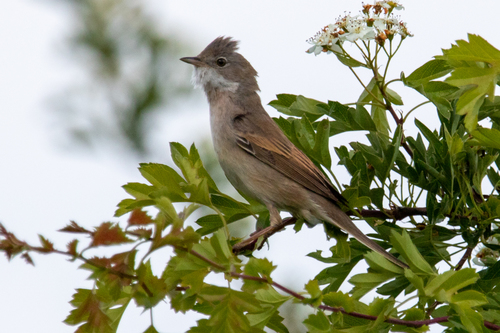
Common Whitethroat (Curruca communis) Common Whitethroat
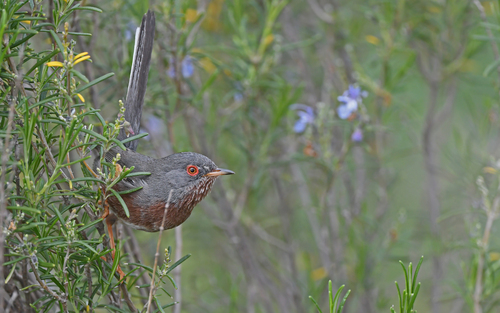
Dartford Warbler (Curruca undata) Dartford Warbler

Media

Loading…

In short

The Common Whitethroat and Dartford Warbler can be distinguished by their habitat preferences and plumage details. The Common Whitethroat is more widespread and often found in open scrubby areas, while the Dartford Warbler prefers heathlands. Key plumage differences include the Common Whitethroat's gray head and white throat, contrasting with the Dartford Warbler's darker, more uniform appearance.

Identification tips

  1. Habitat: Check the habitat; Dartford Warblers are more likely in heathlands. 2. Plumage: Look for the Common Whitethroat's gray head and white throat. 3. Behavior: Note the skulking behavior of Dartford Warblers. 4. Vocalization: Listen for the Common Whitethroat's scratchy song versus the Dartford Warbler's rattling trill.

Size

Both species are small warblers, but the Common Whitethroat is slightly larger and more robust than the Dartford Warbler.

Plumage

The Common Whitethroat has a gray head, white throat, and brown back, with a distinct white eye-ring. In contrast, the Dartford Warbler is darker overall, with a more uniform grayish-brown plumage and lacks the distinct white throat.

Behaviour

Common Whitethroats are more likely to be seen flitting in open areas, while Dartford Warblers are often skulking in dense heathland vegetation.

Habitat

Common Whitethroats are found in open, scrubby areas, hedgerows, and edges of woodlands. Dartford Warblers prefer heathlands with dense gorse and heather.

Voice

The Common Whitethroat has a scratchy, varied song, while the Dartford Warbler's song is a fast, rattling trill. Both species have distinctive calls, but the differences are subtle and best learned through experience.

Submit a better description

Use the same sections as the comparison. Your text is published immediately.

The Common Whitethroat and Dartford Warbler can be distinguished by their habitat preferences and plumage details. The Common Whitethroat is more widespread and often found in open scrubby areas, while the Dartford Warbler prefers heathlands. Key plumage differences include the Common Whitethroat's gray head and white throat, contrasting with the Dartford Warbler's darker, more uniform appearance.

  1. Habitat: Check the habitat; Dartford Warblers are more likely in heathlands. 2. Plumage: Look for the Common Whitethroat's gray head and white throat. 3. Behavior: Note the skulking behavior of Dartford Warblers. 4. Vocalization: Listen for the Common Whitethroat's scratchy song versus the Dartford Warbler's rattling trill.

Both species are small warblers, but the Common Whitethroat is slightly larger and more robust than the Dartford Warbler.

The Common Whitethroat has a gray head, white throat, and brown back, with a distinct white eye-ring. In contrast, the Dartford Warbler is darker overall, with a more uniform grayish-brown plumage and lacks the distinct white throat.

Common Whitethroats are more likely to be seen flitting in open areas, while Dartford Warblers are often skulking in dense heathland vegetation.

Common Whitethroats are found in open, scrubby areas, hedgerows, and edges of woodlands. Dartford Warblers prefer heathlands with dense gorse and heather.

The Common Whitethroat has a scratchy, varied song, while the Dartford Warbler's song is a fast, rattling trill. Both species have distinctive calls, but the differences are subtle and best learned through experience.

Discard your changes?

You have unsaved edits. If you leave now, those changes will be lost.

Common Whitethroat · Dartford Warbler · My Tricky Birds