Birdr

Common Woodpigeon vs Collared Dove

Columba palumbus versus Streptopelia decaocto

Play a quiz with Common Woodpigeon and Collared Dove
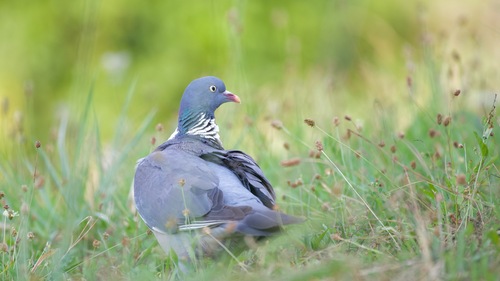
Common Woodpigeon (Columba palumbus) Common Woodpigeon
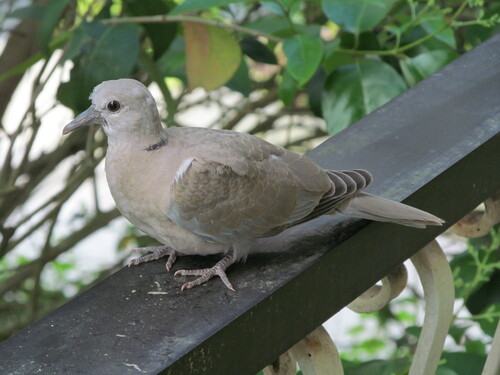
Collared Dove (Streptopelia decaocto) Collared Dove

Media

Loading…

In short

The Common Woodpigeon and the Eurasian Collared-Dove can be distinguished by size and plumage. The Woodpigeon is larger and has distinct white patches on its neck and wings, while the Collared-Dove is smaller with a black neck collar. Both species are widespread and adaptable to various habitats.

Identification tips

  1. Size: Look for the larger size of the Woodpigeon. 2. Neck Markings: Check for white patches on the Woodpigeon and a black collar on the Collared-Dove. 3. Flight: Note the white wing patches of the Woodpigeon in flight. 4. Vocalization: Listen for the distinct calls; the Woodpigeon has a deeper, more complex call compared to the simpler cooing of the Collared-Dove.

Size

The Common Woodpigeon is noticeably larger and bulkier than the Eurasian Collared-Dove.

Plumage

The Woodpigeon has a pinkish flush on the breast and belly with prominent white patches on the neck and wings. The Collared-Dove is paler overall with a distinctive black collar on the neck.

Behaviour

Both species are often seen in urban and suburban areas, but the Woodpigeon is more likely to be found in wooded areas.

Habitat

The Woodpigeon is common in forests, parks, and gardens, while the Collared-Dove prefers urban areas, farmlands, and open country.

Voice

The Woodpigeon has a characteristic 'rhu-rhoooh-rhoo-rhu-rhu' call, while the Collared-Dove's song is a repetitive 'coo-COO-coo'.

Submit a better description

Use the same sections as the comparison. Your text is published immediately.

The Common Woodpigeon and the Eurasian Collared-Dove can be distinguished by size and plumage. The Woodpigeon is larger and has distinct white patches on its neck and wings, while the Collared-Dove is smaller with a black neck collar. Both species are widespread and adaptable to various habitats.

  1. Size: Look for the larger size of the Woodpigeon. 2. Neck Markings: Check for white patches on the Woodpigeon and a black collar on the Collared-Dove. 3. Flight: Note the white wing patches of the Woodpigeon in flight. 4. Vocalization: Listen for the distinct calls; the Woodpigeon has a deeper, more complex call compared to the simpler cooing of the Collared-Dove.

The Common Woodpigeon is noticeably larger and bulkier than the Eurasian Collared-Dove.

The Woodpigeon has a pinkish flush on the breast and belly with prominent white patches on the neck and wings. The Collared-Dove is paler overall with a distinctive black collar on the neck.

Both species are often seen in urban and suburban areas, but the Woodpigeon is more likely to be found in wooded areas.

The Woodpigeon is common in forests, parks, and gardens, while the Collared-Dove prefers urban areas, farmlands, and open country.

The Woodpigeon has a characteristic 'rhu-rhoooh-rhoo-rhu-rhu' call, while the Collared-Dove's song is a repetitive 'coo-COO-coo'.

Discard your changes?

You have unsaved edits. If you leave now, those changes will be lost.

Common Woodpigeon · Collared Dove · My Tricky Birds