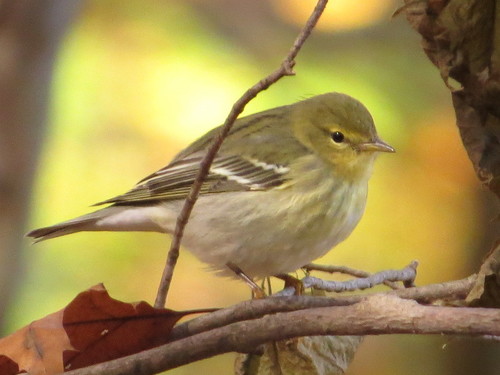
Common Yellowthroat vs Blackpoll Warbler
Geothlypis trichas versus Setophaga striata
Play a quiz with Common Yellowthroat and Blackpoll Warbler
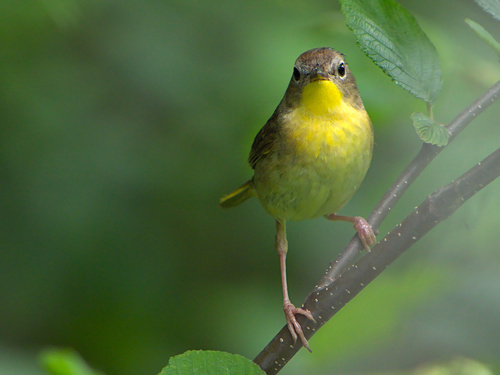
Common Yellowthroat
Blackpoll Warbler
In short
The Common Yellowthroat and Blackpoll Warbler are both small, New World warblers, but they differ in key field marks. The Common Yellowthroat is most easily identified by its distinctive black mask in males, while the Blackpoll Warbler is noted for its streaked back and unique fall migration pattern. These differences are crucial for identification, especially during migration seasons.
Identification tips
- Look for the black mask on male Common Yellowthroats; females lack this but have yellow underparts.
- Note the streaked back and black cap on male Blackpoll Warblers during breeding season.
- Observe habitat: Common Yellowthroats in marshes, Blackpolls in trees during migration.
- Listen for songs: 'Witchety-witchety' for Common Yellowthroat, high-pitched 'tsee' for Blackpoll Warbler.
Size
Both species are small warblers, but the Blackpoll Warbler is slightly larger with a more elongated body.
Plumage
Male Common Yellowthroats have a striking black mask across the face, with olive upperparts and yellow underparts. Females and immatures lack the mask but retain the yellow underparts. Blackpoll Warblers have a more streaked appearance with a black cap in breeding males, and both sexes exhibit streaked backs and white underparts, which are more pronounced than in the Common Yellowthroat.
Behaviour
Common Yellowthroats are often found skulking in dense vegetation, while Blackpoll Warblers are more likely to be seen foraging higher up in trees during migration.
Habitat
Common Yellowthroats prefer marshy and shrubby areas, while Blackpoll Warblers breed in northern coniferous forests and are seen in a variety of habitats during migration.
Voice
The Common Yellowthroat's song is a distinctive 'witchety-witchety-witchety,' whereas the Blackpoll Warbler's song is a high-pitched, rapid series of 'tsee' notes.