Birdr

Connecticut Warbler vs MacGillivray's Warbler

Oporornis agilis versus Geothlypis tolmiei

Play a quiz with Connecticut Warbler and MacGillivray's Warbler
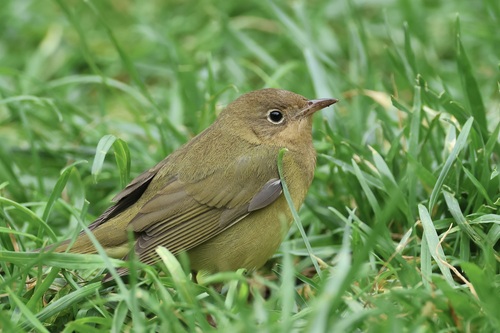
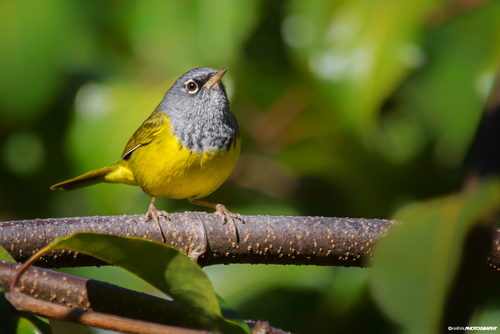
Connecticut Warbler (Oporornis agilis) Connecticut Warbler
MacGillivray's Warbler (Geothlypis tolmiei) MacGillivray's Warbler

Media

Loading…

In short

Connecticut Warbler and MacGillivray's Warbler can be tricky to differentiate, but key differences in their eye-rings and habitat preferences can help. Connecticut Warbler has a complete, bold white eye-ring, while MacGillivray's Warbler sports a broken white eye-ring. Both species have similar plumage tones, but their preferred habitats and vocalizations offer additional clues.

Identification tips

  1. Eye-ring: Look for a complete white eye-ring on Connecticut Warbler versus a broken one on MacGillivray's. 2. Habitat: Consider the habitat; Connecticut Warbler prefers boreal forests, while MacGillivray's favors dense thickets and riparian areas. 3. Song: Listen for the loud, ringing song of the Connecticut Warbler compared to the faster, complex song of MacGillivray's. 4. Migration Timing: Note the timing and location, as Connecticut Warbler migrates through eastern North America, while MacGillivray's is found in the west.

Size

Both species are similar in size, typical of small warblers.

Plumage

Connecticut Warbler features a complete, bold white eye-ring and a more uniform gray hood. MacGillivray's Warbler has a broken white eye-ring and may show a slightly darker gray hood. Both have olive backs and yellow underparts.

Behaviour

Connecticut Warbler is elusive, often staying low in dense cover, while MacGillivray's Warbler is more likely to be seen in disturbed second growth and riparian vegetation.

Habitat

Connecticut Warbler breeds in boreal forests and migrates through eastern North America, overwintering in South America. MacGillivray's Warbler breeds in dense thickets and riparian areas of western North America and winters along the Pacific slope of Central America.

Voice

Connecticut Warbler has a distinctive, loud, and ringing song, often described as a series of repeated phrases. MacGillivray's Warbler's song is a faster, more complex series of notes. Calls are less distinctive but can be useful if familiar.

Submit a better description

Use the same sections as the comparison. Your text is published immediately.

Connecticut Warbler and MacGillivray's Warbler can be tricky to differentiate, but key differences in their eye-rings and habitat preferences can help. Connecticut Warbler has a complete, bold white eye-ring, while MacGillivray's Warbler sports a broken white eye-ring. Both species have similar plumage tones, but their preferred habitats and vocalizations offer additional clues.

  1. Eye-ring: Look for a complete white eye-ring on Connecticut Warbler versus a broken one on MacGillivray's. 2. Habitat: Consider the habitat; Connecticut Warbler prefers boreal forests, while MacGillivray's favors dense thickets and riparian areas. 3. Song: Listen for the loud, ringing song of the Connecticut Warbler compared to the faster, complex song of MacGillivray's. 4. Migration Timing: Note the timing and location, as Connecticut Warbler migrates through eastern North America, while MacGillivray's is found in the west.

Both species are similar in size, typical of small warblers.

Connecticut Warbler features a complete, bold white eye-ring and a more uniform gray hood. MacGillivray's Warbler has a broken white eye-ring and may show a slightly darker gray hood. Both have olive backs and yellow underparts.

Connecticut Warbler is elusive, often staying low in dense cover, while MacGillivray's Warbler is more likely to be seen in disturbed second growth and riparian vegetation.

Connecticut Warbler breeds in boreal forests and migrates through eastern North America, overwintering in South America. MacGillivray's Warbler breeds in dense thickets and riparian areas of western North America and winters along the Pacific slope of Central America.

Connecticut Warbler has a distinctive, loud, and ringing song, often described as a series of repeated phrases. MacGillivray's Warbler's song is a faster, more complex series of notes. Calls are less distinctive but can be useful if familiar.

Discard your changes?

You have unsaved edits. If you leave now, those changes will be lost.

Connecticut Warbler · MacGillivray's Warbler · My Tricky Birds