Connecticut Warbler vs Mourning Warbler
Oporornis agilis versus Geothlypis philadelphia
Play a quiz with Connecticut Warbler and Mourning Warbler
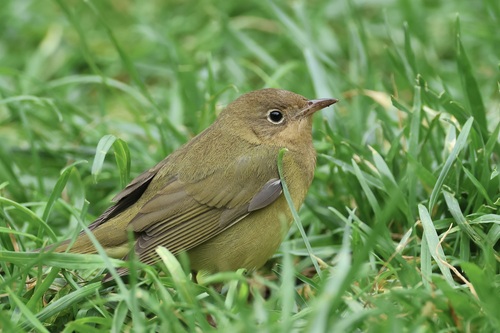
Connecticut Warbler
Mourning Warbler
In short
Connecticut Warbler and Mourning Warbler can be challenging to distinguish, especially in overlapping ranges. The most reliable field mark is the eye-ring: Connecticut Warbler has a complete, bold white eye-ring, while Mourning Warbler lacks this feature. Both species have similar overall coloration, but subtle differences in plumage and behavior can aid identification.
Identification tips
- Eye-ring: Look for the complete white eye-ring on Connecticut Warbler.
- Hood color: Connecticut Warbler has a more uniform gray hood.
- Behavior: Note the more secretive behavior of Connecticut Warbler.
- Habitat: Consider the habitat; Connecticut Warbler prefers denser, wetter areas.
- Song: Listen for the clear, ringing notes of Connecticut Warbler versus the rolling song of Mourning Warbler.
Size
Both species are similar in size, typical of small warblers.
Plumage
Connecticut Warbler has a complete white eye-ring and a more uniform gray hood. Mourning Warbler lacks a complete eye-ring and often shows a broken or absent eye-ring, with a slightly darker, more contrasting hood and throat.
Behaviour
Connecticut Warbler is more secretive, often staying low in dense cover, while Mourning Warbler can be more active and visible, foraging at various heights.
Habitat
Connecticut Warbler prefers dense, wet forests and thickets, especially during migration. Mourning Warbler is often found in shrubby, regenerating forests and edges.
Voice
Connecticut Warbler's song is a series of clear, ringing notes, while Mourning Warbler's song is a rolling, chattery series of notes. These differences can be subtle and require experience to distinguish.