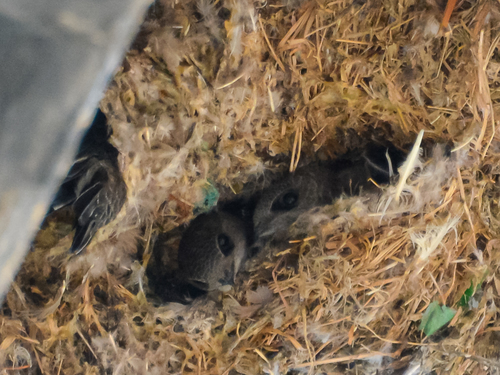
Cook's Swift vs House Swift
Apus cooki versus Apus nipalensis
Play a quiz with Cook's Swift and House Swift
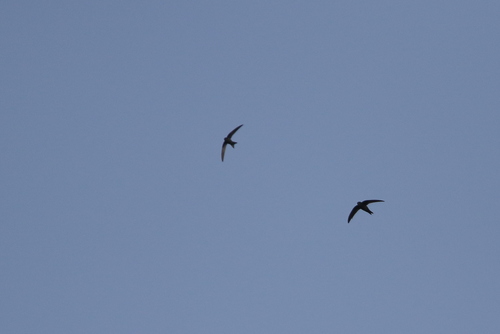
Cook's Swift
House Swift
In short
Cook's Swift and House Swift are both small, dark swifts with similar flight profiles, making them challenging to differentiate. The most reliable field mark is the tail shape: Cook's Swift typically has a more deeply forked tail compared to the slightly forked or square tail of the House Swift. Observers should also note the presence of a white throat patch in House Swift, which is absent in Cook's Swift.
Identification tips
- Tail Shape: Look for a more deeply forked tail in Cook's Swift. 2. Throat Patch: Check for a white throat patch in House Swift. 3. Habitat: Consider the habitat; urban areas may suggest House Swift. 4. Plumage: Note any pale rump or throat patch, indicative of House Swift.
Size
Both species are similar in size, with no significant differences that are easily observed in the field.
Plumage
Cook's Swift is uniformly dark with no distinct markings, whereas House Swift has a contrasting white throat patch and sometimes a pale rump, which can be a useful distinguishing feature.
Behaviour
Both species exhibit similar swift-like flight patterns, characterized by rapid, agile movements and gliding.
Habitat
Cook's Swift is typically found in more forested or mountainous regions, while House Swift is more commonly associated with urban areas and human structures.
Voice
Vocalizations are not a reliable distinguishing feature between these two species in the field.