Copper Pheasant vs Green Pheasant
Syrmaticus soemmerringii versus Phasianus versicolor
Play a quiz with Copper Pheasant and Green Pheasant
Copper Pheasant
Green Pheasant
In short
The Copper Pheasant and Green Pheasant are both native to Japan, but they differ significantly in plumage and habitat preferences. Copper Pheasants are more elusive, favoring dense forests, while Green Pheasants are often found in open-country habitats. Key differences include the Copper Pheasant's striking coppery plumage and the Green Pheasant's iridescent green body.
Identification tips
- Look for the coppery-red plumage of the Copper Pheasant, especially in males. 2. Note the iridescent green body and white neck ring of the male Green Pheasant. 3. Observe habitat: Copper Pheasants are in dense forests, Green Pheasants in open areas. 4. Listen for the Green Pheasant's loud calls in open habitats. 5. Consider the season and location, as both species are endemic to Japan but occupy different niches.
Size
Both species are similar in size, typical of large pheasants, but the Copper Pheasant may appear slightly bulkier due to its longer tail.
Plumage
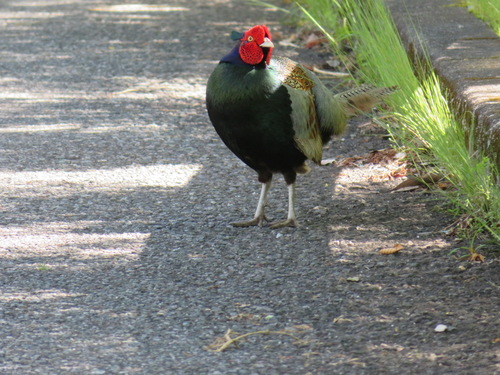
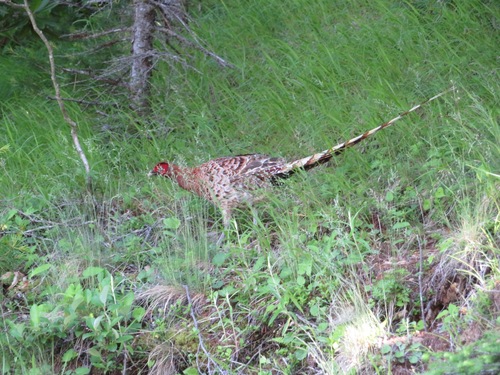
Copper Pheasants have a distinctive coppery-red plumage with intricate patterns, especially in males, while Green Pheasants display a vivid green body with a bluish sheen and a white ring around the neck in males. Females of both species are more camouflaged with mottled brown plumage.
Behaviour
Copper Pheasants are more secretive and tend to stay within dense forests, making them harder to spot, whereas Green Pheasants are more likely to be seen in open areas and may be more accustomed to human presence.
Habitat
Copper Pheasants prefer dense, mountainous forests and are less likely to be found in open areas. In contrast, Green Pheasants inhabit open-country habitats such as agricultural lands and parks, often with tall grass.
Voice
Vocalizations are not a primary distinguishing feature between these species, but Green Pheasants are known for their loud, crowing calls, which may be more frequently heard in open habitats.