Birdr

Cordilleran Canastero vs Sharp-billed Canastero

Asthenes modesta versus Asthenes pyrrholeuca

Play a quiz with Cordilleran Canastero and Sharp-billed Canastero
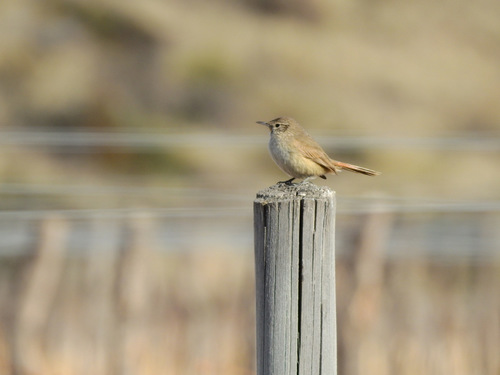
Cordilleran Canastero (Asthenes modesta) Cordilleran Canastero
Sharp-billed Canastero (Asthenes pyrrholeuca) Sharp-billed Canastero

Media

Loading…

In short

The Cordilleran Canastero and Sharp-billed Canastero are similar in appearance but can be distinguished by bill shape and habitat preferences. The Cordilleran has a more robust bill and is often found in boulder-strewn grasslands, while the Sharp-billed has a finer bill and prefers shrubby areas.

Identification tips

  1. Bill Shape: Look for a more robust bill in the Cordilleran and a finer bill in the Sharp-billed. 2. Habitat: Note the environment; grasslands for Cordilleran, shrubby areas for Sharp-billed. 3. Vocalization: Listen for the chattering, trilling song of the Cordilleran.

Size

Both species are similar in size, typical of canasteros, with no significant size difference noted.

Plumage

The Cordilleran Canastero has more streaking on the neck and flanks, while the Sharp-billed Canastero has less pronounced streaking. The coloration of lateral rectrices can also differ, but this is subtle.

Behaviour

Both species are terrestrial and curious, but the Cordilleran Canastero is more often detected by its chattering, trilling song.

Habitat

Cordilleran Canastero is typically found in boulder-strewn grasslands, whereas the Sharp-billed Canastero is more associated with shrubby areas.

Voice

The Cordilleran Canastero is noted for its chattering, trilling song, which is a key auditory cue for identification. The Sharp-billed Canastero's vocalizations are less emphasized in the sources.

Submit a better description

Use the same sections as the comparison. Your text is published immediately.

The Cordilleran Canastero and Sharp-billed Canastero are similar in appearance but can be distinguished by bill shape and habitat preferences. The Cordilleran has a more robust bill and is often found in boulder-strewn grasslands, while the Sharp-billed has a finer bill and prefers shrubby areas.

  1. Bill Shape: Look for a more robust bill in the Cordilleran and a finer bill in the Sharp-billed. 2. Habitat: Note the environment; grasslands for Cordilleran, shrubby areas for Sharp-billed. 3. Vocalization: Listen for the chattering, trilling song of the Cordilleran.

Both species are similar in size, typical of canasteros, with no significant size difference noted.

The Cordilleran Canastero has more streaking on the neck and flanks, while the Sharp-billed Canastero has less pronounced streaking. The coloration of lateral rectrices can also differ, but this is subtle.

Both species are terrestrial and curious, but the Cordilleran Canastero is more often detected by its chattering, trilling song.

Cordilleran Canastero is typically found in boulder-strewn grasslands, whereas the Sharp-billed Canastero is more associated with shrubby areas.

The Cordilleran Canastero is noted for its chattering, trilling song, which is a key auditory cue for identification. The Sharp-billed Canastero's vocalizations are less emphasized in the sources.

Discard your changes?

You have unsaved edits. If you leave now, those changes will be lost.

Cordilleran Canastero · Sharp-billed Canastero · My Tricky Birds