
Birdr

Corn Bunting vs Common Reed Bunting

Emberiza calandra versus Emberiza schoeniclus

Play a quiz with Corn Bunting and Common Reed Bunting
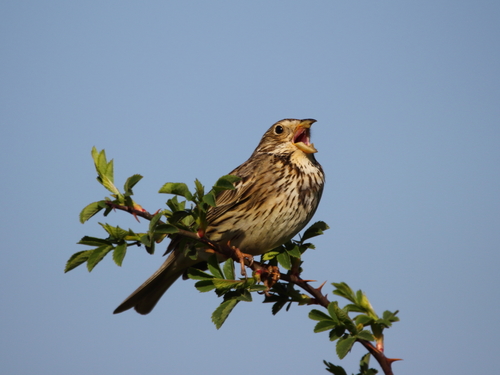
Corn Bunting (Emberiza calandra) Corn Bunting
Common Reed Bunting (Emberiza schoeniclus) Common Reed Bunting

Media

Loading…

In short

The Corn Bunting and Common Reed Bunting are both members of the Emberizidae family, but they differ in size and habitat preferences. The Corn Bunting is larger and more robust, often found in open farmland, while the Common Reed Bunting is smaller and more slender, typically inhabiting reedbeds and wetlands.

Identification tips

  1. Size and Shape: Look for the larger, more robust Corn Bunting versus the smaller, slender Common Reed Bunting. 2. Habitat: Corn Buntings are in open fields, Common Reed Buntings in reedbeds. 3. Plumage: Note the Corn Bunting's uniform streaking and the male Common Reed Bunting's black head. 4. Song: Listen for the Corn Bunting's jangling trill compared to the Common Reed Bunting's simpler notes.

Size

The Corn Bunting is noticeably larger and bulkier than the Common Reed Bunting.

Plumage

Corn Buntings have a more uniform brown and streaked plumage with a stout bill, whereas Common Reed Buntings have a more contrasting plumage with a distinctive black head in males and a more slender bill.

Behaviour

Corn Buntings are often seen perched on wires or posts in open fields, while Common Reed Buntings are more likely to be found flitting among reeds and vegetation.

Habitat

Corn Buntings prefer open farmland and grasslands, whereas Common Reed Buntings are associated with wetlands and reedbeds.

Voice

The Corn Bunting's song is a repetitive, jangling trill, while the Common Reed Bunting's song is a simpler, repetitive series of notes.

Submit a better description

Use the same sections as the comparison. Your text is published immediately.

The Corn Bunting and Common Reed Bunting are both members of the Emberizidae family, but they differ in size and habitat preferences. The Corn Bunting is larger and more robust, often found in open farmland, while the Common Reed Bunting is smaller and more slender, typically inhabiting reedbeds and wetlands.

  1. Size and Shape: Look for the larger, more robust Corn Bunting versus the smaller, slender Common Reed Bunting. 2. Habitat: Corn Buntings are in open fields, Common Reed Buntings in reedbeds. 3. Plumage: Note the Corn Bunting's uniform streaking and the male Common Reed Bunting's black head. 4. Song: Listen for the Corn Bunting's jangling trill compared to the Common Reed Bunting's simpler notes.

The Corn Bunting is noticeably larger and bulkier than the Common Reed Bunting.

Corn Buntings have a more uniform brown and streaked plumage with a stout bill, whereas Common Reed Buntings have a more contrasting plumage with a distinctive black head in males and a more slender bill.

Corn Buntings are often seen perched on wires or posts in open fields, while Common Reed Buntings are more likely to be found flitting among reeds and vegetation.

Corn Buntings prefer open farmland and grasslands, whereas Common Reed Buntings are associated with wetlands and reedbeds.

The Corn Bunting's song is a repetitive, jangling trill, while the Common Reed Bunting's song is a simpler, repetitive series of notes.

Discard your changes?

You have unsaved edits. If you leave now, those changes will be lost.

Corn Bunting · Common Reed Bunting · My Tricky Birds