Birdr

Corn Bunting vs Ortolan Bunting

Emberiza calandra versus Emberiza hortulana

Play a quiz with Corn Bunting and Ortolan Bunting
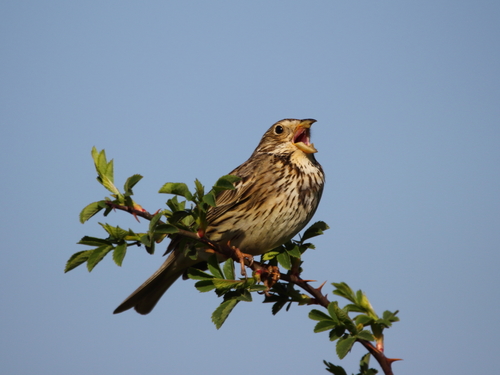
Corn Bunting (Emberiza calandra) Corn Bunting
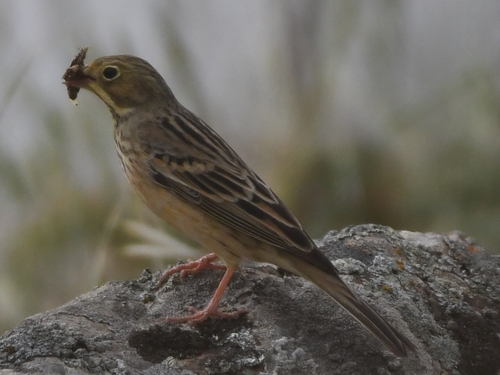
Ortolan Bunting (Emberiza hortulana) Ortolan Bunting

Media

Loading…

In short

Corn Buntings and Ortolan Buntings can be tricky to differentiate, but the bill size is a key feature: Corn Buntings have a noticeably larger and stouter bill. In addition, Corn Buntings are generally larger and more robust than Ortolan Buntings.

Identification tips

  1. Bill size: Look for the larger, stouter bill of the Corn Bunting. 2. Size and build: Note the larger and more robust body of the Corn Bunting. 3. Plumage: Check for the yellowish and greenish tinge on Ortolan Buntings, especially in males. 4. Song: Listen for the jangling song of the Corn Bunting versus the melodic song of the Ortolan Bunting. 5. Habitat: Consider the habitat; Corn Buntings prefer open farmland, while Ortolan Buntings favor open woodlands.

Size

Corn Buntings are larger and more robust, with a heavier build compared to the slimmer Ortolan Buntings.

Plumage

Both species have streaked brown plumage, but Ortolan Buntings often show a more distinct yellowish wash on the underparts and a greenish tinge on the head, especially in males.

Behaviour

Corn Buntings are often seen perched conspicuously on wires or posts, while Ortolan Buntings may be more secretive and less likely to perch in the open.

Habitat

Corn Buntings prefer open farmland and grasslands, whereas Ortolan Buntings are more often found in open woodlands and scrubby areas.

Voice

Corn Buntings have a distinctive jangling song, often described as sounding like a set of keys being jingled, while Ortolan Buntings have a more melodic and whistled song.

Submit a better description

Use the same sections as the comparison. Your text is published immediately.

Corn Buntings and Ortolan Buntings can be tricky to differentiate, but the bill size is a key feature: Corn Buntings have a noticeably larger and stouter bill. In addition, Corn Buntings are generally larger and more robust than Ortolan Buntings.

  1. Bill size: Look for the larger, stouter bill of the Corn Bunting. 2. Size and build: Note the larger and more robust body of the Corn Bunting. 3. Plumage: Check for the yellowish and greenish tinge on Ortolan Buntings, especially in males. 4. Song: Listen for the jangling song of the Corn Bunting versus the melodic song of the Ortolan Bunting. 5. Habitat: Consider the habitat; Corn Buntings prefer open farmland, while Ortolan Buntings favor open woodlands.

Corn Buntings are larger and more robust, with a heavier build compared to the slimmer Ortolan Buntings.

Both species have streaked brown plumage, but Ortolan Buntings often show a more distinct yellowish wash on the underparts and a greenish tinge on the head, especially in males.

Corn Buntings are often seen perched conspicuously on wires or posts, while Ortolan Buntings may be more secretive and less likely to perch in the open.

Corn Buntings prefer open farmland and grasslands, whereas Ortolan Buntings are more often found in open woodlands and scrubby areas.

Corn Buntings have a distinctive jangling song, often described as sounding like a set of keys being jingled, while Ortolan Buntings have a more melodic and whistled song.

Discard your changes?

You have unsaved edits. If you leave now, those changes will be lost.

Corn Bunting · Ortolan Bunting · My Tricky Birds