Birdr

Corncrake vs African Crake

Crex crex versus Crecopsis egregia

Play a quiz with Corncrake and African Crake
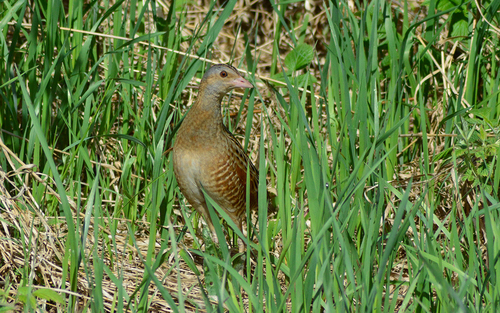
Corncrake (Crex crex) Corncrake
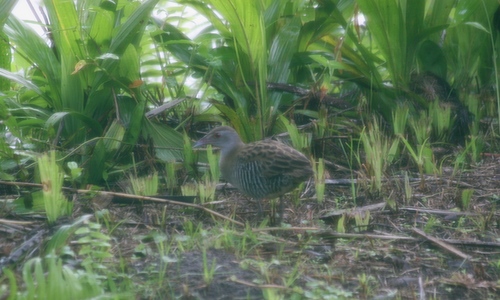
African Crake (Crecopsis egregia) African Crake

Media

Loading…

In short

The Corncrake and African Crake can be differentiated by their habitat preferences and vocalizations. Corncrakes are more likely found in dry meadows and tall herbaceous vegetation, while African Crakes are associated with wetter habitats. The Corncrake's loud, grating call is distinctive during its breeding season, whereas the African Crake has a different vocal profile.

Identification tips

Look for Corncrakes in dry meadows and listen for their loud, grating call during the breeding season. African Crakes are more likely in wetter areas and have different vocalizations.

Behaviour

Both species prefer to flee on foot rather than by flight, but Corncrakes are noted for their high-stepping gait and laterally compressed body.

Habitat

Corncrakes are not wetland specialists and prefer dry meadows and tall herbaceous vegetation. African Crakes are more associated with wetter habitats.

Voice

The Corncrake's male has a loud, grating call during the breeding season, which is absent on its African wintering grounds. The African Crake's vocalizations differ but are not detailed here.

Submit a better description

Use the same sections as the comparison. Your text is published immediately.

The Corncrake and African Crake can be differentiated by their habitat preferences and vocalizations. Corncrakes are more likely found in dry meadows and tall herbaceous vegetation, while African Crakes are associated with wetter habitats. The Corncrake's loud, grating call is distinctive during its breeding season, whereas the African Crake has a different vocal profile.

Look for Corncrakes in dry meadows and listen for their loud, grating call during the breeding season. African Crakes are more likely in wetter areas and have different vocalizations.

Both species prefer to flee on foot rather than by flight, but Corncrakes are noted for their high-stepping gait and laterally compressed body.

Corncrakes are not wetland specialists and prefer dry meadows and tall herbaceous vegetation. African Crakes are more associated with wetter habitats.

The Corncrake's male has a loud, grating call during the breeding season, which is absent on its African wintering grounds. The African Crake's vocalizations differ but are not detailed here.

Discard your changes?

You have unsaved edits. If you leave now, those changes will be lost.

Corncrake · African Crake · My Tricky Birds