Birdr

Corncrake vs Sora

Crex crex versus Porzana carolina

Play a quiz with Corncrake and Sora
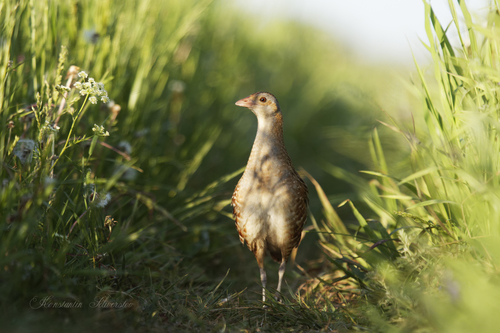
Corncrake (Crex crex) Corncrake
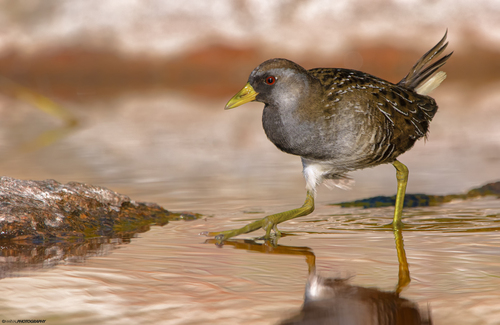
Sora (Porzana carolina) Sora

Media

Loading…

In short

The Corncrake and Sora are both medium-sized rails, but they can be distinguished by their plumage and vocalizations. The Corncrake has a more uniform brownish-black upperpart with chestnut wing patches, while the Sora displays a distinctive gray face and breast with a contrasting black face mask. Vocalizations are also a key differentiator, with the Corncrake's loud, grating call contrasting with the Sora's descending whinny.

Identification tips

  1. Look for the chestnut wing patches in the Corncrake when in flight. 2. Note the gray face and black mask of the Sora. 3. Listen for the grating call of the Corncrake versus the whinnying call of the Sora. 4. Observe behavior: Corncrakes often flee on foot, while Soras may be seen swimming.

Size

Both species are medium-sized rails, but the Corncrake is slightly larger, measuring 27–30 cm in length compared to the Sora's more compact form.

Plumage

Corncrakes have buff-and-gray-streaked brownish-black upperparts with chestnut wing patches and blue-gray underparts. In contrast, Soras have a gray face and breast, a black face mask, and white-edged flanks with a more spotted appearance.

Behaviour

Corncrakes are known for their preference to flee on foot with a high-stepping gait, while Soras are more likely to be seen swimming or skulking in marsh vegetation.

Habitat

Corncrakes are typically found in managed floodplain meadows and grasslands, while Soras prefer freshwater marshes with dense vegetation.

Voice

The Corncrake's call is a loud, grating sound, often repeated for hours, while the Sora's call is a descending whinny that is distinctive and easily recognizable.

Submit a better description

Use the same sections as the comparison. Your text is published immediately.

The Corncrake and Sora are both medium-sized rails, but they can be distinguished by their plumage and vocalizations. The Corncrake has a more uniform brownish-black upperpart with chestnut wing patches, while the Sora displays a distinctive gray face and breast with a contrasting black face mask. Vocalizations are also a key differentiator, with the Corncrake's loud, grating call contrasting with the Sora's descending whinny.

  1. Look for the chestnut wing patches in the Corncrake when in flight. 2. Note the gray face and black mask of the Sora. 3. Listen for the grating call of the Corncrake versus the whinnying call of the Sora. 4. Observe behavior: Corncrakes often flee on foot, while Soras may be seen swimming.

Both species are medium-sized rails, but the Corncrake is slightly larger, measuring 27–30 cm in length compared to the Sora's more compact form.

Corncrakes have buff-and-gray-streaked brownish-black upperparts with chestnut wing patches and blue-gray underparts. In contrast, Soras have a gray face and breast, a black face mask, and white-edged flanks with a more spotted appearance.

Corncrakes are known for their preference to flee on foot with a high-stepping gait, while Soras are more likely to be seen swimming or skulking in marsh vegetation.

Corncrakes are typically found in managed floodplain meadows and grasslands, while Soras prefer freshwater marshes with dense vegetation.

The Corncrake's call is a loud, grating sound, often repeated for hours, while the Sora's call is a descending whinny that is distinctive and easily recognizable.

Discard your changes?

You have unsaved edits. If you leave now, those changes will be lost.

Corncrake · Sora · My Tricky Birds