Birdr

Crested Becard vs White-throated Spadebill

Pachyramphus validus versus Platyrinchus mystaceus

Play a quiz with Crested Becard and White-throated Spadebill
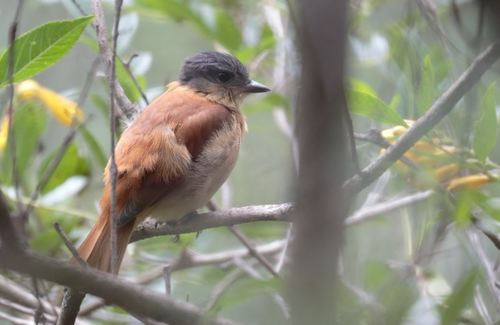
Crested Becard (Pachyramphus validus) Crested Becard
White-throated Spadebill (Platyrinchus mystaceus) White-throated Spadebill

Media

Loading…

In short

The Crested Becard and White-throated Spadebill can be distinguished primarily by their size and habitat preferences. The Crested Becard is larger and often found in more open areas, while the White-throated Spadebill is smaller and prefers dense undergrowth in humid forests.

Identification tips

  1. Size: Look for the larger size of the Crested Becard. 2. Habitat: Note the habitat; Crested Becards are in open areas, White-throated Spadebills in dense forest undergrowth. 3. Crest: Check for the presence of a crest in the Crested Becard. 4. Throat Color: Observe the white throat of the White-throated Spadebill. 5. Behavior: Watch for the Crested Becard's perching behavior versus the Spadebill's secretive nature.

Size

The Crested Becard is noticeably larger than the White-throated Spadebill.

Plumage

The Crested Becard has a distinctive crest and a more robust appearance, while the White-throated Spadebill has a more subtle plumage with a white throat that contrasts with its darker head.

Behaviour

Crested Becards perch visibly and scan for prey, whereas White-throated Spadebills are more secretive, often found in dense undergrowth.

Habitat

Crested Becards are found in more open areas, while White-throated Spadebills inhabit humid lowland and montane forests, often in dense undergrowth.

Voice

The White-throated Spadebill's vocalizations are often necessary for detection in its dense habitat, whereas the Crested Becard's vocalizations are less emphasized in identification.

Submit a better description

Use the same sections as the comparison. Your text is published immediately.

The Crested Becard and White-throated Spadebill can be distinguished primarily by their size and habitat preferences. The Crested Becard is larger and often found in more open areas, while the White-throated Spadebill is smaller and prefers dense undergrowth in humid forests.

  1. Size: Look for the larger size of the Crested Becard. 2. Habitat: Note the habitat; Crested Becards are in open areas, White-throated Spadebills in dense forest undergrowth. 3. Crest: Check for the presence of a crest in the Crested Becard. 4. Throat Color: Observe the white throat of the White-throated Spadebill. 5. Behavior: Watch for the Crested Becard's perching behavior versus the Spadebill's secretive nature.

The Crested Becard is noticeably larger than the White-throated Spadebill.

The Crested Becard has a distinctive crest and a more robust appearance, while the White-throated Spadebill has a more subtle plumage with a white throat that contrasts with its darker head.

Crested Becards perch visibly and scan for prey, whereas White-throated Spadebills are more secretive, often found in dense undergrowth.

Crested Becards are found in more open areas, while White-throated Spadebills inhabit humid lowland and montane forests, often in dense undergrowth.

The White-throated Spadebill's vocalizations are often necessary for detection in its dense habitat, whereas the Crested Becard's vocalizations are less emphasized in identification.

Discard your changes?

You have unsaved edits. If you leave now, those changes will be lost.

Crested Becard · White-throated Spadebill · My Tricky Birds