Birdr

Crested Oropendola vs Chestnut-headed Oropendola

Psarocolius decumanus versus Psarocolius wagleri

Play a quiz with Crested Oropendola and Chestnut-headed Oropendola
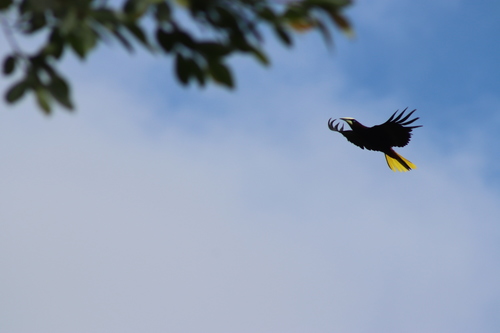
Crested Oropendola (Psarocolius decumanus) Crested Oropendola
Chestnut-headed Oropendola (Psarocolius wagleri) Chestnut-headed Oropendola

Media

Loading…

In short

The Crested Oropendola and Chestnut-headed Oropendola can be distinguished by head color and tail patterns. The Crested Oropendola has a mostly black body with a chestnut rump and yellow tail, while the Chestnut-headed Oropendola features a distinctive chestnut head and neck.

Identification tips

  1. Look for the chestnut head in the Chestnut-headed Oropendola. 2. Note the chestnut rump and yellow tail in the Crested Oropendola. 3. Check for blue irides in the Crested Oropendola. 4. Observe any seasonal movements, which may indicate Crested Oropendola presence.

Size

Both species are similar in size, typical of large oropendolas.

Plumage

The Crested Oropendola is largely black with a chestnut rump and yellow tail, and blue irides. The Chestnut-headed Oropendola has a chestnut head and neck, with a more uniform dark body and yellow tail.

Behaviour

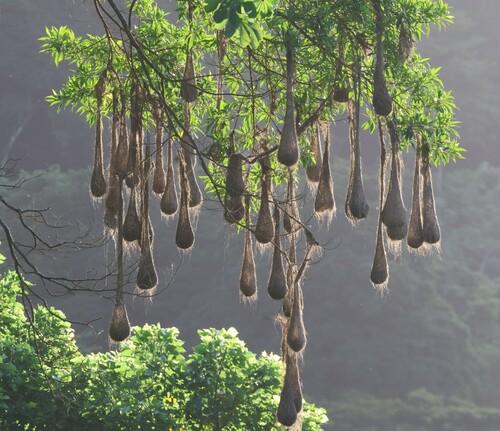
Both species may be found in colonies and are often attended by parasitic Giant Cowbirds. Seasonal movements are noted in the Crested Oropendola.

Habitat

The Crested Oropendola is found below 1000 m but can reach up to 2600 m in Colombia. The Chestnut-headed Oropendola's habitat preferences are not detailed here.

Voice

Vocalizations are not detailed in the provided notes.

Submit a better description

Use the same sections as the comparison. Your text is published immediately.

The Crested Oropendola and Chestnut-headed Oropendola can be distinguished by head color and tail patterns. The Crested Oropendola has a mostly black body with a chestnut rump and yellow tail, while the Chestnut-headed Oropendola features a distinctive chestnut head and neck.

  1. Look for the chestnut head in the Chestnut-headed Oropendola. 2. Note the chestnut rump and yellow tail in the Crested Oropendola. 3. Check for blue irides in the Crested Oropendola. 4. Observe any seasonal movements, which may indicate Crested Oropendola presence.

Both species are similar in size, typical of large oropendolas.

The Crested Oropendola is largely black with a chestnut rump and yellow tail, and blue irides. The Chestnut-headed Oropendola has a chestnut head and neck, with a more uniform dark body and yellow tail.

Both species may be found in colonies and are often attended by parasitic Giant Cowbirds. Seasonal movements are noted in the Crested Oropendola.

The Crested Oropendola is found below 1000 m but can reach up to 2600 m in Colombia. The Chestnut-headed Oropendola's habitat preferences are not detailed here.

Vocalizations are not detailed in the provided notes.

Discard your changes?

You have unsaved edits. If you leave now, those changes will be lost.

Crested Oropendola · Chestnut-headed Oropendola · My Tricky Birds