Birdr

Crimson-breasted Gonolek vs Olive Bushshrike

Laniarius atrococcineus versus Chlorophoneus olivaceus

Play a quiz with Crimson-breasted Gonolek and Olive Bushshrike
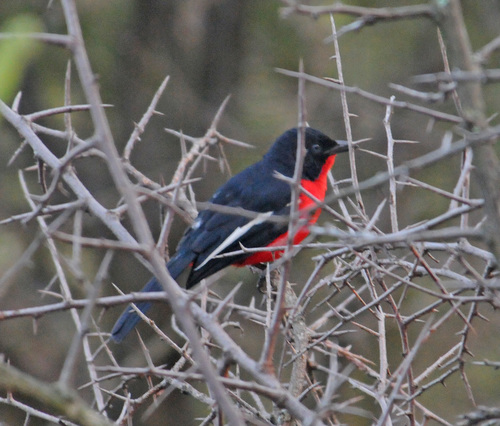
Crimson-breasted Gonolek (Laniarius atrococcineus) Crimson-breasted Gonolek
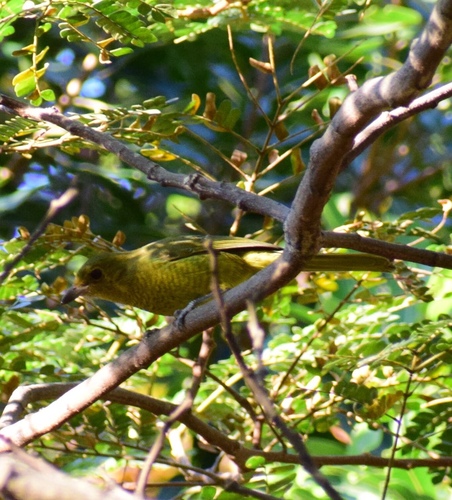
Olive Bushshrike (Chlorophoneus olivaceus) Olive Bushshrike

Media

Loading…

In short

The Crimson-breasted Gonolek is unmistakable with its vivid crimson breast and black upperparts, while the Olive Bushshrike features a more subdued olive and yellow coloration. Both belong to the bushshrike family but differ significantly in color and habitat preferences, making visual identification straightforward.

Identification tips

  1. Plumage: Look for the bright crimson breast of the Gonolek versus the olive and yellow tones of the Bushshrike. 2. Habitat: Note the environment; Gonoleks favor dry, open areas, while Bushshrikes prefer dense, moist forests. 3. Vocalization: Listen for the Gonolek's musical duets compared to the varied calls of the Bushshrike.

Size

Both species are similar in size, typical of bushshrikes, with no significant differences in structure.

Plumage

The Crimson-breasted Gonolek has a striking crimson breast and belly with black upperparts and head. In contrast, the Olive Bushshrike is predominantly olive-green with a yellowish underbelly, lacking the bold contrast seen in the Gonolek.

Behaviour

Both species are skulking and often remain hidden in dense vegetation, but the Gonolek may be more conspicuous due to its striking coloration.

Habitat

The Crimson-breasted Gonolek is found in dry savannas and thornbush, while the Olive Bushshrike prefers moist forests and dense woodland, often at higher elevations.

Voice

Both species have distinctive calls, but the Gonolek's duet calls are more musical, while the Olive Bushshrike's calls are typically more varied and include whistles and trills.

Submit a better description

Use the same sections as the comparison. Your text is published immediately.

The Crimson-breasted Gonolek is unmistakable with its vivid crimson breast and black upperparts, while the Olive Bushshrike features a more subdued olive and yellow coloration. Both belong to the bushshrike family but differ significantly in color and habitat preferences, making visual identification straightforward.

  1. Plumage: Look for the bright crimson breast of the Gonolek versus the olive and yellow tones of the Bushshrike. 2. Habitat: Note the environment; Gonoleks favor dry, open areas, while Bushshrikes prefer dense, moist forests. 3. Vocalization: Listen for the Gonolek's musical duets compared to the varied calls of the Bushshrike.

Both species are similar in size, typical of bushshrikes, with no significant differences in structure.

The Crimson-breasted Gonolek has a striking crimson breast and belly with black upperparts and head. In contrast, the Olive Bushshrike is predominantly olive-green with a yellowish underbelly, lacking the bold contrast seen in the Gonolek.

Both species are skulking and often remain hidden in dense vegetation, but the Gonolek may be more conspicuous due to its striking coloration.

The Crimson-breasted Gonolek is found in dry savannas and thornbush, while the Olive Bushshrike prefers moist forests and dense woodland, often at higher elevations.

Both species have distinctive calls, but the Gonolek's duet calls are more musical, while the Olive Bushshrike's calls are typically more varied and include whistles and trills.

Discard your changes?

You have unsaved edits. If you leave now, those changes will be lost.

Crimson-breasted Gonolek · Olive Bushshrike · My Tricky Birds