Birdr

Crowned Cormorant vs Yellow-throated Bush Sparrow

Microcarbo coronatus versus Gymnoris superciliaris

Play a quiz with Crowned Cormorant and Yellow-throated Bush Sparrow
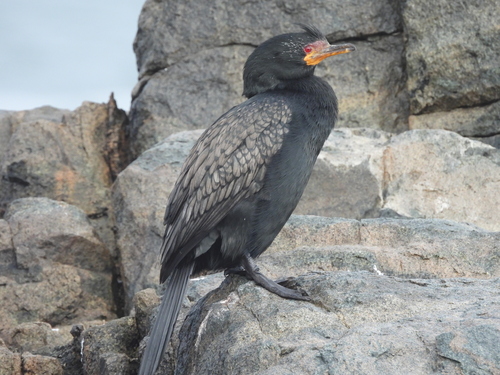
Crowned Cormorant (Microcarbo coronatus) Crowned Cormorant
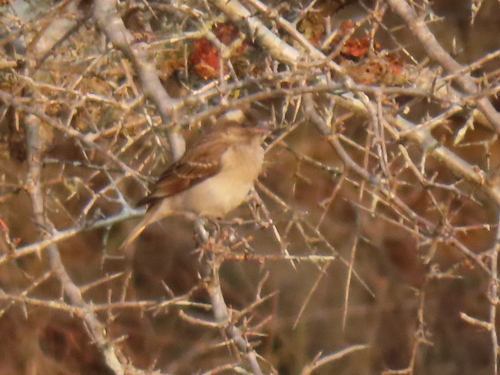
Yellow-throated Bush Sparrow (Gymnoris superciliaris) Yellow-throated Bush Sparrow

Media

Loading…

In short

The Crowned Cormorant and the Yellow-throated Bush Sparrow are easily distinguished by their size and habitat preferences. The cormorant is a waterbird with a dark plumage, while the sparrow is a small, terrestrial bird with distinctive yellow throat markings.

Identification tips

  1. Look for the size difference: cormorants are much larger. 2. Check the habitat: cormorants are near water, sparrows in dry areas. 3. Note the plumage: dark and crested for cormorants, yellow throat for sparrows. 4. Observe the behavior: diving for cormorants, ground foraging for sparrows. 5. Listen for vocal differences: guttural versus melodic calls.

Size

The Crowned Cormorant is significantly larger than the Yellow-throated Bush Sparrow, with a more elongated body typical of cormorants.

Plumage

The Crowned Cormorant has a mostly dark plumage with a slight crest on the head, while the Yellow-throated Bush Sparrow features a yellow throat and a more sparrow-like, streaked appearance.

Behaviour

Crowned Cormorants are often seen diving for fish in water, whereas Yellow-throated Bush Sparrows are typically found foraging on the ground or in bushes.

Habitat

Crowned Cormorants are associated with coastal and marine environments, while Yellow-throated Bush Sparrows inhabit dry, open woodlands and savannas.

Voice

The vocalizations of these species differ significantly, with the cormorant having a more guttural call typical of waterbirds, and the sparrow producing more melodic, chirping sounds.

Submit a better description

Use the same sections as the comparison. Your text is published immediately.

The Crowned Cormorant and the Yellow-throated Bush Sparrow are easily distinguished by their size and habitat preferences. The cormorant is a waterbird with a dark plumage, while the sparrow is a small, terrestrial bird with distinctive yellow throat markings.

  1. Look for the size difference: cormorants are much larger. 2. Check the habitat: cormorants are near water, sparrows in dry areas. 3. Note the plumage: dark and crested for cormorants, yellow throat for sparrows. 4. Observe the behavior: diving for cormorants, ground foraging for sparrows. 5. Listen for vocal differences: guttural versus melodic calls.

The Crowned Cormorant is significantly larger than the Yellow-throated Bush Sparrow, with a more elongated body typical of cormorants.

The Crowned Cormorant has a mostly dark plumage with a slight crest on the head, while the Yellow-throated Bush Sparrow features a yellow throat and a more sparrow-like, streaked appearance.

Crowned Cormorants are often seen diving for fish in water, whereas Yellow-throated Bush Sparrows are typically found foraging on the ground or in bushes.

Crowned Cormorants are associated with coastal and marine environments, while Yellow-throated Bush Sparrows inhabit dry, open woodlands and savannas.

The vocalizations of these species differ significantly, with the cormorant having a more guttural call typical of waterbirds, and the sparrow producing more melodic, chirping sounds.

Discard your changes?

You have unsaved edits. If you leave now, those changes will be lost.

Crowned Cormorant · Yellow-throated Bush Sparrow · My Tricky Birds