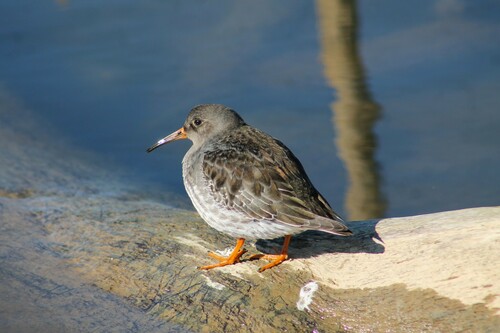
Curlew Sandpiper vs Purple Sandpiper
Calidris ferruginea versus Calidris maritima
Play a quiz with Curlew Sandpiper and Purple Sandpiper
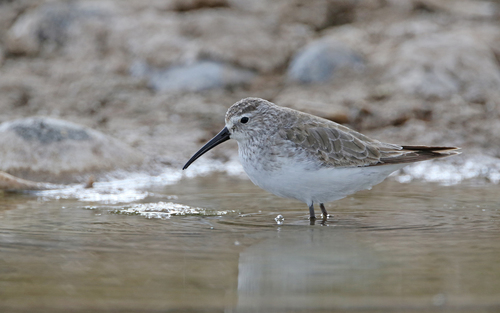
Curlew Sandpiper
Purple Sandpiper
In short
Curlew Sandpipers and Purple Sandpipers can be distinguished by their bill shape and plumage. The Curlew Sandpiper has a longer, more decurved bill, while the Purple Sandpiper has a shorter, straighter bill. In non-breeding plumage, the Curlew Sandpiper is paler with a white rump, whereas the Purple Sandpiper has darker, slate-colored upperparts with a faint purple sheen.
Identification tips
- Bill Shape: Curlew Sandpipers have longer, more decurved bills compared to the shorter, straighter bills of Purple Sandpipers.
- Plumage: Look for the paler plumage and white rump of the Curlew Sandpiper versus the darker, slate-colored upperparts of the Purple Sandpiper.
- Habitat: Curlew Sandpipers are more likely in mudflats, while Purple Sandpipers are found on rocky coasts.
- Behavior: Note the tendency of Purple Sandpipers to stay low over water when flushed.
Size
Both species are similar in size, but the Curlew Sandpiper may appear slightly more slender.
Plumage
In non-breeding plumage, Curlew Sandpipers are paler with a white rump and underparts, while Purple Sandpipers have slate to charcoal upperparts with a faint purple sheen and darker overall appearance.
Behaviour
Curlew Sandpipers are often found in flocks and are more likely to be seen in open mudflats, whereas Purple Sandpipers are more solitary and prefer rocky coastlines. Purple Sandpipers are approachable and tend to fly low over water when flushed.
Habitat
Curlew Sandpipers are typically found in mudflats and estuaries during migration, while Purple Sandpipers prefer rocky shorelines and are often seen on coastal rocks during winter.
Voice
Vocalizations are not a primary distinguishing feature in the field for these species.