Birdr

Curlew Sandpiper vs Temminck's Stint

Calidris ferruginea versus Calidris temminckii

Play a quiz with Curlew Sandpiper and Temminck's Stint
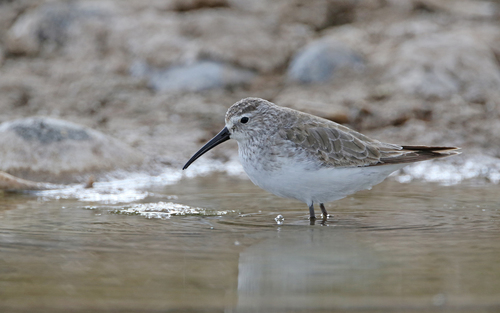
Curlew Sandpiper (Calidris ferruginea) Curlew Sandpiper
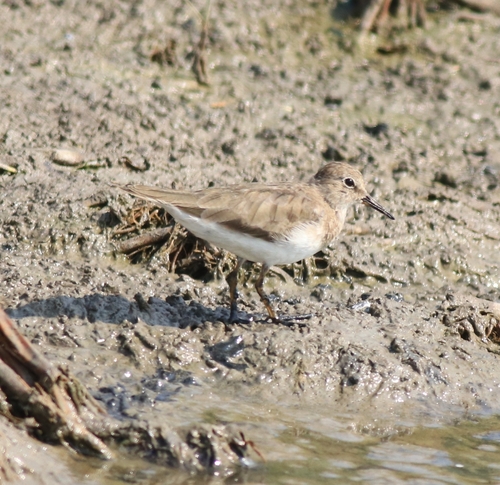
Temminck's Stint (Calidris temminckii) Temminck's Stint

Media

Loading…

In short

Curlew Sandpiper and Temminck's Stint can be distinguished by size and bill shape. Curlew Sandpiper is larger with a longer, decurved bill, while Temminck's Stint is smaller with a shorter, straight bill. Both species have different plumage patterns, especially noticeable in non-breeding adults.

Identification tips

  1. Size and bill shape: Look for the larger size and longer, decurved bill of the Curlew Sandpiper. 2. Plumage: Note the white rump of the Curlew Sandpiper versus the plain dark grey upperparts of Temminck's Stint. 3. Habitat: Consider the habitat; Curlew Sandpiper is more likely in coastal areas, while Temminck's Stint is found inland. 4. Vocalization: Listen for the distinctive 'tirr' call of Temminck's Stint.

Size

Curlew Sandpiper is larger, typically around 19–21 cm in length, compared to the smaller Temminck's Stint, which measures 13–15 cm.

Plumage

In non-breeding plumage, Curlew Sandpiper has grey upperparts and a white underbelly with a distinctive white rump. Temminck's Stint has plain dark grey upperparts and a uniform pale grey-brown breast, with white on the chin, throat, and belly.

Behaviour

Both species forage by pecking at prey, but Temminck's Stint often forages singly or in small groups, while Curlew Sandpiper may be seen in larger flocks.

Habitat

Curlew Sandpiper is often found in coastal areas, while Temminck's Stint prefers inland wetlands during migration and breeding.

Voice

Temminck's Stint gives a single, short, hard 'tirr' or 'trrrrit' call, whereas Curlew Sandpiper's vocalizations are less well-documented in this context.

Submit a better description

Use the same sections as the comparison. Your text is published immediately.

Curlew Sandpiper and Temminck's Stint can be distinguished by size and bill shape. Curlew Sandpiper is larger with a longer, decurved bill, while Temminck's Stint is smaller with a shorter, straight bill. Both species have different plumage patterns, especially noticeable in non-breeding adults.

  1. Size and bill shape: Look for the larger size and longer, decurved bill of the Curlew Sandpiper. 2. Plumage: Note the white rump of the Curlew Sandpiper versus the plain dark grey upperparts of Temminck's Stint. 3. Habitat: Consider the habitat; Curlew Sandpiper is more likely in coastal areas, while Temminck's Stint is found inland. 4. Vocalization: Listen for the distinctive 'tirr' call of Temminck's Stint.

Curlew Sandpiper is larger, typically around 19–21 cm in length, compared to the smaller Temminck's Stint, which measures 13–15 cm.

In non-breeding plumage, Curlew Sandpiper has grey upperparts and a white underbelly with a distinctive white rump. Temminck's Stint has plain dark grey upperparts and a uniform pale grey-brown breast, with white on the chin, throat, and belly.

Both species forage by pecking at prey, but Temminck's Stint often forages singly or in small groups, while Curlew Sandpiper may be seen in larger flocks.

Curlew Sandpiper is often found in coastal areas, while Temminck's Stint prefers inland wetlands during migration and breeding.

Temminck's Stint gives a single, short, hard 'tirr' or 'trrrrit' call, whereas Curlew Sandpiper's vocalizations are less well-documented in this context.

Discard your changes?

You have unsaved edits. If you leave now, those changes will be lost.

Curlew Sandpiper · Temminck's Stint · My Tricky Birds