Birdr

Darjeeling Woodpecker vs Himalayan Woodpecker

Dendrocopos darjellensis versus Dendrocopos himalayensis

Play a quiz with Darjeeling Woodpecker and Himalayan Woodpecker
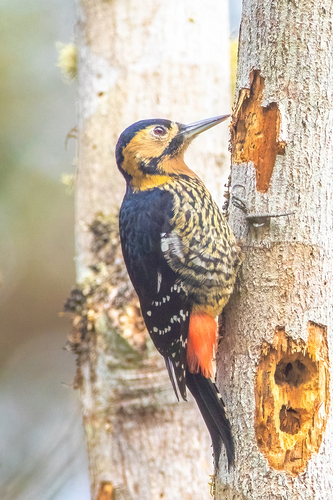
Darjeeling Woodpecker (Dendrocopos darjellensis) Darjeeling Woodpecker
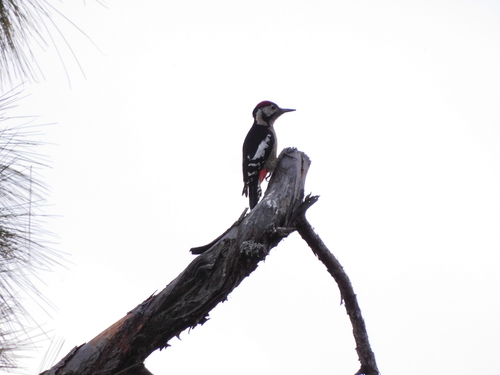
Himalayan Woodpecker (Dendrocopos himalayensis) Himalayan Woodpecker

Media

Loading…

In short

The Darjeeling Woodpecker and Himalayan Woodpecker are similar in appearance, but can be distinguished by subtle differences in plumage and habitat preference. The Darjeeling Woodpecker typically has a more contrasting black and white plumage, while the Himalayan Woodpecker tends to have a slightly duller appearance. Both species share similar calls, making visual identification more reliable.

Identification tips

  1. Look for the more contrasting black and white plumage of the Darjeeling Woodpecker. 2. Observe the habitat: Darjeeling Woodpeckers are more likely found at higher altitudes. 3. Use visual cues over vocalizations, as calls are similar. 4. Note any white wing patches, more pronounced in Darjeeling Woodpeckers.

Size

Both species are similar in size, typical of medium-sized woodpeckers.

Plumage

The Darjeeling Woodpecker has a more contrasting black and white plumage, with a distinct white patch on the wings. The Himalayan Woodpecker's plumage is generally duller, with less contrast between the black and white areas.

Behaviour

Both species exhibit typical woodpecker behavior, such as drumming on trees and foraging on trunks and branches.

Habitat

The Darjeeling Woodpecker is often found in higher altitude forests, while the Himalayan Woodpecker is more common in a wider range of forested habitats, including lower altitudes.

Voice

Both species have similar vocalizations, making it challenging to distinguish them by sound alone.

Submit a better description

Use the same sections as the comparison. Your text is published immediately.

The Darjeeling Woodpecker and Himalayan Woodpecker are similar in appearance, but can be distinguished by subtle differences in plumage and habitat preference. The Darjeeling Woodpecker typically has a more contrasting black and white plumage, while the Himalayan Woodpecker tends to have a slightly duller appearance. Both species share similar calls, making visual identification more reliable.

  1. Look for the more contrasting black and white plumage of the Darjeeling Woodpecker. 2. Observe the habitat: Darjeeling Woodpeckers are more likely found at higher altitudes. 3. Use visual cues over vocalizations, as calls are similar. 4. Note any white wing patches, more pronounced in Darjeeling Woodpeckers.

Both species are similar in size, typical of medium-sized woodpeckers.

The Darjeeling Woodpecker has a more contrasting black and white plumage, with a distinct white patch on the wings. The Himalayan Woodpecker's plumage is generally duller, with less contrast between the black and white areas.

Both species exhibit typical woodpecker behavior, such as drumming on trees and foraging on trunks and branches.

The Darjeeling Woodpecker is often found in higher altitude forests, while the Himalayan Woodpecker is more common in a wider range of forested habitats, including lower altitudes.

Both species have similar vocalizations, making it challenging to distinguish them by sound alone.

Discard your changes?

You have unsaved edits. If you leave now, those changes will be lost.

Darjeeling Woodpecker · Himalayan Woodpecker · My Tricky Birds