Birdr

Dark-eyed Junco vs Black-and-white Warbler

Junco hyemalis versus Mniotilta varia

Play a quiz with Dark-eyed Junco and Black-and-white Warbler

Dark-eyed Junco (Junco hyemalis) Dark-eyed Junco
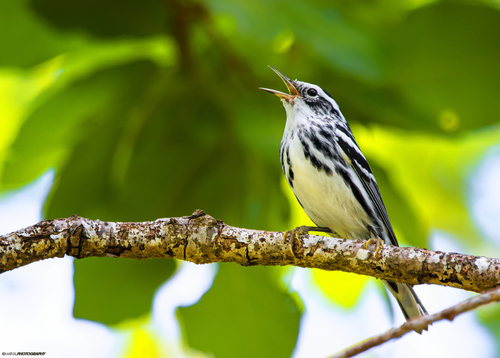
Black-and-white Warbler (Mniotilta varia) Black-and-white Warbler

Media

Loading…

In short

The Dark-eyed Junco and Black-and-white Warbler are easily distinguished by their behavior and plumage. The junco is a ground-dwelling sparrow with a distinctive white outer tail flash, while the warbler is a tree-foraging bird with striking black-and-white stripes. Observing their foraging habits and plumage patterns will help separate these two species in the field.

Identification tips

Size

The Dark-eyed Junco is slightly larger and bulkier than the Black-and-white Warbler.

Plumage

The Dark-eyed Junco has a gray or blackish hood with a whitish breast and belly, and white outer tail feathers that are visible in flight. In contrast, the Black-and-white Warbler features a unique, sharply defined black-and-white striped plumage across its body.

Behaviour

Dark-eyed Juncos typically forage on the ground, while Black-and-white Warblers are known for their nuthatch-like behavior, creeping along tree trunks and limbs to forage.

Habitat

Dark-eyed Juncos are often found in open woodlands and forest edges, whereas Black-and-white Warblers prefer interior forests but can also be seen in forest edges and mixed flocks.

Voice

The vocalizations of these species differ, with the junco having a simple trill and the warbler producing a high-pitched, thin song. However, vocalizations are not the most reliable field marks for distinguishing these species.

Submit a better description

Use the same sections as the comparison. Your text is published immediately.

The Dark-eyed Junco and Black-and-white Warbler are easily distinguished by their behavior and plumage. The junco is a ground-dwelling sparrow with a distinctive white outer tail flash, while the warbler is a tree-foraging bird with striking black-and-white stripes. Observing their foraging habits and plumage patterns will help separate these two species in the field.

  • Observe behavior: Juncos forage on the ground, while Black-and-white Warblers are seen creeping along tree trunks.
  • Check plumage: Look for the junco's white outer tail feathers and the warbler's black-and-white stripes.
  • Consider habitat: Juncos are more likely in open areas, while warblers prefer forest interiors.
  • Listen for calls: Although not the most reliable, juncos have a simple trill, and warblers have a high-pitched song.

The Dark-eyed Junco is slightly larger and bulkier than the Black-and-white Warbler.

The Dark-eyed Junco has a gray or blackish hood with a whitish breast and belly, and white outer tail feathers that are visible in flight. In contrast, the Black-and-white Warbler features a unique, sharply defined black-and-white striped plumage across its body.

Dark-eyed Juncos typically forage on the ground, while Black-and-white Warblers are known for their nuthatch-like behavior, creeping along tree trunks and limbs to forage.

Dark-eyed Juncos are often found in open woodlands and forest edges, whereas Black-and-white Warblers prefer interior forests but can also be seen in forest edges and mixed flocks.

The vocalizations of these species differ, with the junco having a simple trill and the warbler producing a high-pitched, thin song. However, vocalizations are not the most reliable field marks for distinguishing these species.

Discard your changes?

You have unsaved edits. If you leave now, those changes will be lost.

Dark-eyed Junco · Black-and-white Warbler · My Tricky Birds