Birdr

Dark-eyed Junco vs Redpoll

Junco hyemalis versus Acanthis flammea

Play a quiz with Dark-eyed Junco and Redpoll

Dark-eyed Junco (Junco hyemalis) Dark-eyed Junco
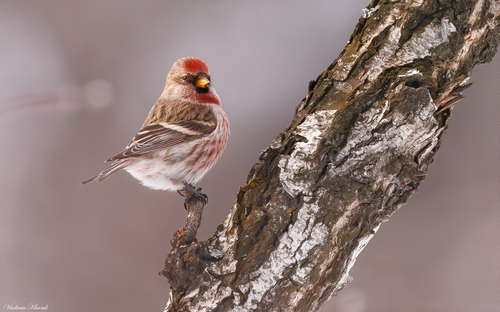
Redpoll (Acanthis flammea) Redpoll

Media

Loading…

In short

The Dark-eyed Junco and Redpoll are small, sparrow-like birds that can be distinguished by their plumage and habitat preferences. Juncos have a distinctive gray or blackish hood and white outer tail feathers, while Redpolls are noted for their fluffy, snowball-like appearance with a red cap. Both species can be found in different habitats, with Juncos preferring forests and Redpolls more often in open, cold environments.

Identification tips

Size

Both species are small, but the Dark-eyed Junco is slightly larger and more robust compared to the more petite and delicate Redpoll.

Plumage

Dark-eyed Juncos have a gray or blackish hood and contrasting whitish breast and belly, with white outer tail feathers. Redpolls have a red cap and are generally paler, with a fluffy appearance and streaked sides.

Behaviour

Juncos are often seen foraging on the ground, while Redpolls may be observed in flocks, feeding on seeds in trees or shrubs.

Habitat

Dark-eyed Juncos are commonly found in forests and woodland edges, whereas Redpolls are more adapted to open, cold environments, often seen in tundra or boreal regions.

Voice

Juncos have a simple, musical trill, while Redpolls produce a series of twittering calls and trills. Both species' songs are distinctive, but not always the most reliable field mark.

Submit a better description

Use the same sections as the comparison. Your text is published immediately.

The Dark-eyed Junco and Redpoll are small, sparrow-like birds that can be distinguished by their plumage and habitat preferences. Juncos have a distinctive gray or blackish hood and white outer tail feathers, while Redpolls are noted for their fluffy, snowball-like appearance with a red cap. Both species can be found in different habitats, with Juncos preferring forests and Redpolls more often in open, cold environments.

  • Look for the gray or blackish hood and white outer tail feathers of the Junco.
  • Note the red cap and fluffy appearance of the Redpoll.
  • Consider habitat: Juncos in forests, Redpolls in open, cold areas.
  • Listen for the Junco's musical trill versus the Redpoll's twittering calls.

Both species are small, but the Dark-eyed Junco is slightly larger and more robust compared to the more petite and delicate Redpoll.

Dark-eyed Juncos have a gray or blackish hood and contrasting whitish breast and belly, with white outer tail feathers. Redpolls have a red cap and are generally paler, with a fluffy appearance and streaked sides.

Juncos are often seen foraging on the ground, while Redpolls may be observed in flocks, feeding on seeds in trees or shrubs.

Dark-eyed Juncos are commonly found in forests and woodland edges, whereas Redpolls are more adapted to open, cold environments, often seen in tundra or boreal regions.

Juncos have a simple, musical trill, while Redpolls produce a series of twittering calls and trills. Both species' songs are distinctive, but not always the most reliable field mark.

Discard your changes?

You have unsaved edits. If you leave now, those changes will be lost.

Dark-eyed Junco · Redpoll · My Tricky Birds