Birdr

Dark-rumped Swift vs Grey-rumped Treeswift

Apus acuticauda versus Hemiprocne longipennis

Play a quiz with Dark-rumped Swift and Grey-rumped Treeswift
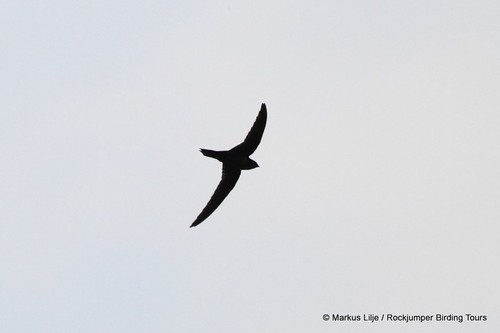
Dark-rumped Swift (Apus acuticauda) Dark-rumped Swift
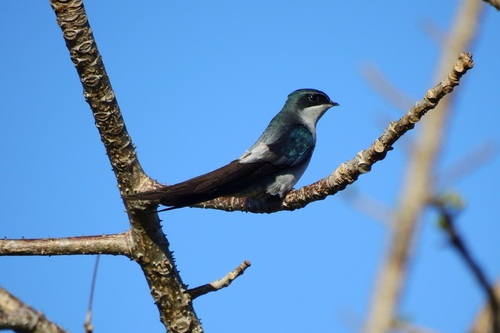
Grey-rumped Treeswift (Hemiprocne longipennis) Grey-rumped Treeswift

Media

Loading…

In short

The Dark-rumped Swift and Grey-rumped Treeswift can be distinguished primarily by their tail shape and overall structure. The Dark-rumped Swift has a more streamlined body with a forked tail, while the Grey-rumped Treeswift features a longer, more slender body with a distinctive long, pointed tail. These differences are most apparent in flight.

Identification tips

  1. Look for the tail shape: forked in Dark-rumped Swift, long and pointed in Grey-rumped Treeswift. 2. Note the body structure: more compact in Dark-rumped Swift, slender in Grey-rumped Treeswift. 3. Observe plumage contrast: Grey-rumped Treeswift has a more contrasting plumage with a white throat. 4. Consider behavior: Dark-rumped Swifts are more likely to be seen in flocks, while Grey-rumped Treeswifts often perch alone or in pairs.

Size

The Grey-rumped Treeswift is generally larger and more slender than the compact Dark-rumped Swift.

Plumage

The Dark-rumped Swift has a uniformly dark plumage with a slightly paler rump, while the Grey-rumped Treeswift shows a greyish rump and more contrasting plumage with a white throat and face.

Behaviour

Dark-rumped Swifts are fast-flying and often seen in flocks, whereas Grey-rumped Treeswifts are more solitary or seen in pairs, often perching conspicuously on branches.

Habitat

Dark-rumped Swifts are typically found in open skies over forests and grasslands, while Grey-rumped Treeswifts prefer forest edges and clearings, often near water.

Voice

Vocalizations are not a primary distinguishing feature, but the Grey-rumped Treeswift may have more varied calls compared to the simpler calls of the Dark-rumped Swift.

Submit a better description

Use the same sections as the comparison. Your text is published immediately.

The Dark-rumped Swift and Grey-rumped Treeswift can be distinguished primarily by their tail shape and overall structure. The Dark-rumped Swift has a more streamlined body with a forked tail, while the Grey-rumped Treeswift features a longer, more slender body with a distinctive long, pointed tail. These differences are most apparent in flight.

  1. Look for the tail shape: forked in Dark-rumped Swift, long and pointed in Grey-rumped Treeswift. 2. Note the body structure: more compact in Dark-rumped Swift, slender in Grey-rumped Treeswift. 3. Observe plumage contrast: Grey-rumped Treeswift has a more contrasting plumage with a white throat. 4. Consider behavior: Dark-rumped Swifts are more likely to be seen in flocks, while Grey-rumped Treeswifts often perch alone or in pairs.

The Grey-rumped Treeswift is generally larger and more slender than the compact Dark-rumped Swift.

The Dark-rumped Swift has a uniformly dark plumage with a slightly paler rump, while the Grey-rumped Treeswift shows a greyish rump and more contrasting plumage with a white throat and face.

Dark-rumped Swifts are fast-flying and often seen in flocks, whereas Grey-rumped Treeswifts are more solitary or seen in pairs, often perching conspicuously on branches.

Dark-rumped Swifts are typically found in open skies over forests and grasslands, while Grey-rumped Treeswifts prefer forest edges and clearings, often near water.

Vocalizations are not a primary distinguishing feature, but the Grey-rumped Treeswift may have more varied calls compared to the simpler calls of the Dark-rumped Swift.

Discard your changes?

You have unsaved edits. If you leave now, those changes will be lost.

Dark-rumped Swift · Grey-rumped Treeswift · My Tricky Birds