Birdr

Dark-sided Flycatcher vs Spotted Flycatcher

Muscicapa sibirica versus Muscicapa striata

Play a quiz with Dark-sided Flycatcher and Spotted Flycatcher
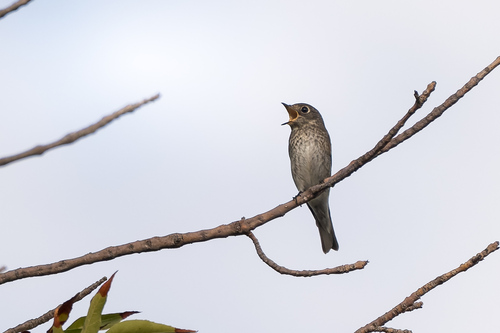
Dark-sided Flycatcher (Muscicapa sibirica) Dark-sided Flycatcher
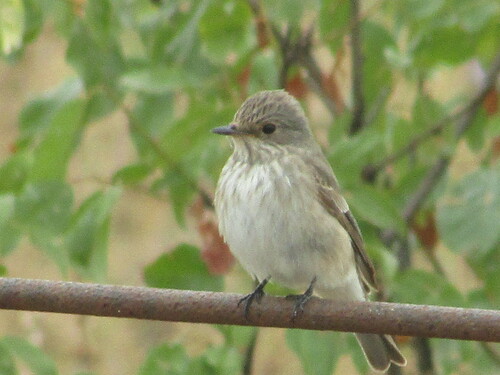
Spotted Flycatcher (Muscicapa striata) Spotted Flycatcher

Media

Loading…

In short

The Dark-sided Flycatcher and Spotted Flycatcher can be distinguished by their plumage and structural differences. The Dark-sided Flycatcher typically has a more uniform dark appearance with streaks on the breast, while the Spotted Flycatcher shows more distinct spotting on the breast and a paler overall tone. Both species are similar in size and structure, but careful observation of plumage and behavior can aid in identification.

Identification tips

  1. Look for the darker, more uniform plumage of the Dark-sided Flycatcher compared to the paler, spotted breast of the Spotted Flycatcher. 2. Observe the habitat: Dark-sided Flycatchers are more likely in dense forests, while Spotted Flycatchers prefer open areas. 3. Note behavior: Both sally for insects, but the Dark-sided may be more secretive. 4. Use vocalizations with caution unless familiar with both species.

Size

Both species are similar in size, typical of small flycatchers.

Plumage

The Dark-sided Flycatcher has a darker, more uniform plumage with subtle streaking on the breast, whereas the Spotted Flycatcher displays more pronounced spotting on a paler breast and overall lighter appearance.

Behaviour

Both species exhibit typical flycatcher behavior, often seen sallying from perches to catch insects. The Dark-sided Flycatcher may appear slightly more secretive.

Habitat

The Dark-sided Flycatcher prefers forested habitats, often in mountainous regions, while the Spotted Flycatcher is more commonly found in open woodlands, gardens, and parks.

Voice

The vocalizations of these species are not distinctly different enough to be a reliable field mark without experience.

Submit a better description

Use the same sections as the comparison. Your text is published immediately.

The Dark-sided Flycatcher and Spotted Flycatcher can be distinguished by their plumage and structural differences. The Dark-sided Flycatcher typically has a more uniform dark appearance with streaks on the breast, while the Spotted Flycatcher shows more distinct spotting on the breast and a paler overall tone. Both species are similar in size and structure, but careful observation of plumage and behavior can aid in identification.

  1. Look for the darker, more uniform plumage of the Dark-sided Flycatcher compared to the paler, spotted breast of the Spotted Flycatcher. 2. Observe the habitat: Dark-sided Flycatchers are more likely in dense forests, while Spotted Flycatchers prefer open areas. 3. Note behavior: Both sally for insects, but the Dark-sided may be more secretive. 4. Use vocalizations with caution unless familiar with both species.

Both species are similar in size, typical of small flycatchers.

The Dark-sided Flycatcher has a darker, more uniform plumage with subtle streaking on the breast, whereas the Spotted Flycatcher displays more pronounced spotting on a paler breast and overall lighter appearance.

Both species exhibit typical flycatcher behavior, often seen sallying from perches to catch insects. The Dark-sided Flycatcher may appear slightly more secretive.

The Dark-sided Flycatcher prefers forested habitats, often in mountainous regions, while the Spotted Flycatcher is more commonly found in open woodlands, gardens, and parks.

The vocalizations of these species are not distinctly different enough to be a reliable field mark without experience.

Discard your changes?

You have unsaved edits. If you leave now, those changes will be lost.

Dark-sided Flycatcher · Spotted Flycatcher · My Tricky Birds