Birdr

Dark-throated Oriole vs Ventriloquial Oriole

Oriolus xanthonotus versus Oriolus consobrinus

Play a quiz with Dark-throated Oriole and Ventriloquial Oriole
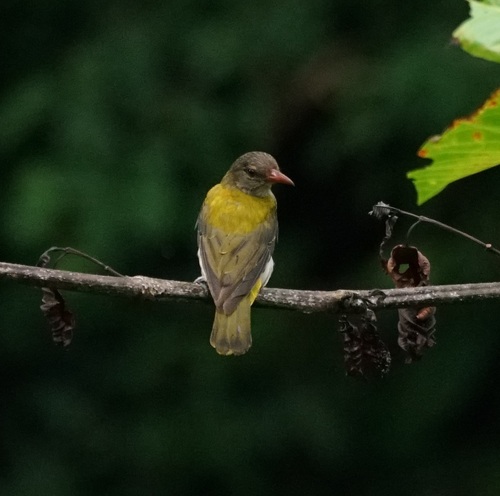
Dark-throated Oriole (Oriolus xanthonotus) Dark-throated Oriole
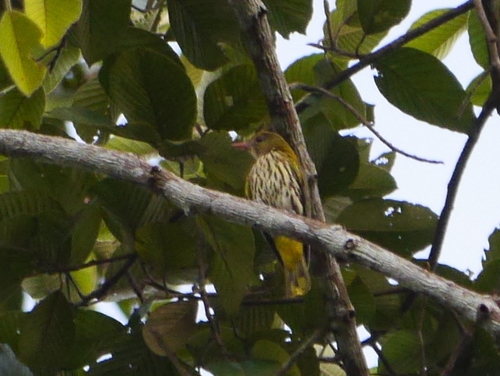
Ventriloquial Oriole (Oriolus consobrinus) Ventriloquial Oriole

Media

Loading…

In short

The Dark-throated Oriole and Ventriloquial Oriole are similar in appearance, both belonging to the Old World Orioles. The most reliable field mark is the throat color: the Dark-throated Oriole has a distinct dark throat, while the Ventriloquial Oriole lacks this feature. Both species share similar habitats and behaviors, making vocalizations and plumage details crucial for identification.

Identification tips

  1. Check the throat color: Dark-throated Oriole has a dark throat, Ventriloquial Oriole does not. 2. Listen for vocalizations: Note any distinct calls or songs. 3. Observe in similar habitats: Both species may be found in the same areas, so rely on visual and auditory cues. 4. Consider overall plumage: While similar, the throat coloration is the most reliable visual cue.

Size

Both species are similar in size, typical of orioles, with no significant differences in structure or proportions noted.

Plumage

The Dark-throated Oriole has a distinctive dark throat which contrasts with its lighter underparts, while the Ventriloquial Oriole lacks this dark throat, presenting a more uniform coloration. Both species have similar overall plumage tones, but the throat coloration is a key differentiator.

Behaviour

Both species exhibit typical oriole behavior, often seen foraging in the canopy and moving through trees with agility. No significant behavioral differences are noted.

Habitat

Both species inhabit similar environments, often found in forested areas and edges. They share overlapping ranges, making habitat alone an unreliable differentiator.

Voice

Vocalizations are not well-documented in the provided notes, but differences in song and call can be crucial for identification in the field. Observers should listen carefully for any distinct vocal patterns.

Submit a better description

Use the same sections as the comparison. Your text is published immediately.

The Dark-throated Oriole and Ventriloquial Oriole are similar in appearance, both belonging to the Old World Orioles. The most reliable field mark is the throat color: the Dark-throated Oriole has a distinct dark throat, while the Ventriloquial Oriole lacks this feature. Both species share similar habitats and behaviors, making vocalizations and plumage details crucial for identification.

  1. Check the throat color: Dark-throated Oriole has a dark throat, Ventriloquial Oriole does not. 2. Listen for vocalizations: Note any distinct calls or songs. 3. Observe in similar habitats: Both species may be found in the same areas, so rely on visual and auditory cues. 4. Consider overall plumage: While similar, the throat coloration is the most reliable visual cue.

Both species are similar in size, typical of orioles, with no significant differences in structure or proportions noted.

The Dark-throated Oriole has a distinctive dark throat which contrasts with its lighter underparts, while the Ventriloquial Oriole lacks this dark throat, presenting a more uniform coloration. Both species have similar overall plumage tones, but the throat coloration is a key differentiator.

Both species exhibit typical oriole behavior, often seen foraging in the canopy and moving through trees with agility. No significant behavioral differences are noted.

Both species inhabit similar environments, often found in forested areas and edges. They share overlapping ranges, making habitat alone an unreliable differentiator.

Vocalizations are not well-documented in the provided notes, but differences in song and call can be crucial for identification in the field. Observers should listen carefully for any distinct vocal patterns.

Discard your changes?

You have unsaved edits. If you leave now, those changes will be lost.

Dark-throated Oriole · Ventriloquial Oriole · My Tricky Birds