Birdr

Dark-throated Seedeater vs Rufous-rumped Seedeater

Sporophila ruficollis versus Sporophila hypochroma

Play a quiz with Dark-throated Seedeater and Rufous-rumped Seedeater
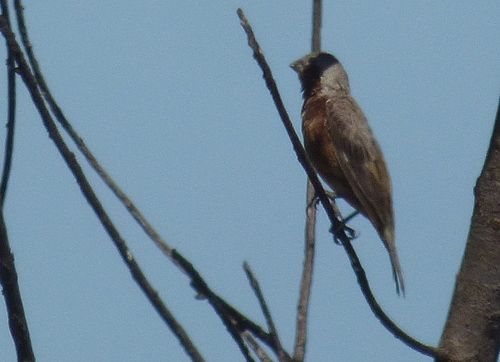
Dark-throated Seedeater (Sporophila ruficollis) Dark-throated Seedeater
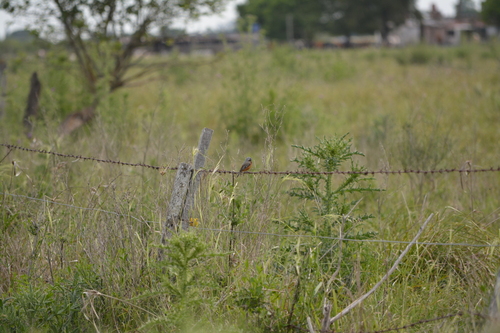
Rufous-rumped Seedeater (Sporophila hypochroma) Rufous-rumped Seedeater

Media

Loading…

In short

The Dark-throated Seedeater and Rufous-rumped Seedeater can be tricky to distinguish, especially in mixed flocks. Males of both species are gray above and rufous below, but the Dark-throated Seedeater has a distinctive darker rusty-brown throat. The Rufous-rumped Seedeater is noted for its rufous rump and a small white speculum on the wings.

Identification tips

Size

Both species are similar in size, typical of small seedeaters.

Plumage

Male Dark-throated Seedeaters have a gray cap and chestnut underparts with a darker rusty-brown throat. In contrast, male Rufous-rumped Seedeaters have a bluer gray upperpart, a rufous rump, and a small white speculum on the wings. Females of both species are buffy brown and difficult to distinguish.

Behaviour

Both species forage on grass seeds and are often seen in small groups or mixed flocks. The Dark-throated Seedeater is highly migratory.

Habitat

Dark-throated Seedeaters breed in NE Argentina to SC Brazil and migrate south of the Amazon Basin. Rufous-rumped Seedeaters are found in pastures and savannas and are affected by habitat loss.

Submit a better description

Use the same sections as the comparison. Your text is published immediately.

The Dark-throated Seedeater and Rufous-rumped Seedeater can be tricky to distinguish, especially in mixed flocks. Males of both species are gray above and rufous below, but the Dark-throated Seedeater has a distinctive darker rusty-brown throat. The Rufous-rumped Seedeater is noted for its rufous rump and a small white speculum on the wings.

  • Male Dark-throated Seedeater: Look for the darker rusty-brown throat.
  • Male Rufous-rumped Seedeater: Check for the rufous rump and white wing speculum.
  • Females: Generally indistinguishable, focus on accompanying males for clues.
  • Mixed flocks: Pay attention to subtle plumage differences when observing groups.

Both species are similar in size, typical of small seedeaters.

Male Dark-throated Seedeaters have a gray cap and chestnut underparts with a darker rusty-brown throat. In contrast, male Rufous-rumped Seedeaters have a bluer gray upperpart, a rufous rump, and a small white speculum on the wings. Females of both species are buffy brown and difficult to distinguish.

Both species forage on grass seeds and are often seen in small groups or mixed flocks. The Dark-throated Seedeater is highly migratory.

Dark-throated Seedeaters breed in NE Argentina to SC Brazil and migrate south of the Amazon Basin. Rufous-rumped Seedeaters are found in pastures and savannas and are affected by habitat loss.

Discard your changes?

You have unsaved edits. If you leave now, those changes will be lost.

Dark-throated Seedeater · Rufous-rumped Seedeater · My Tricky Birds