Birdr

Demoiselle Crane vs Sandhill Crane

Grus virgo versus Antigone canadensis

Play a quiz with Demoiselle Crane and Sandhill Crane
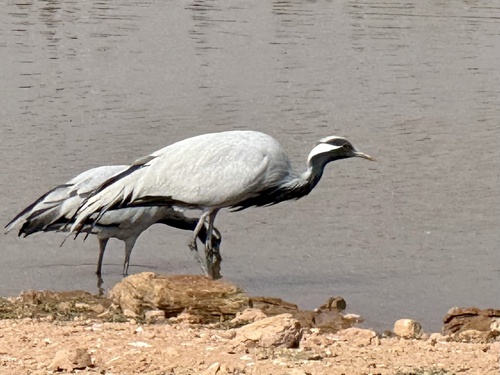
Demoiselle Crane (Grus virgo) Demoiselle Crane
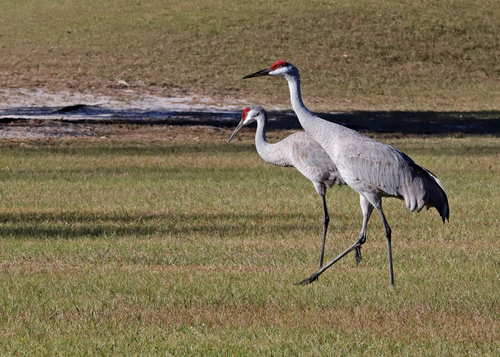
Sandhill Crane (Antigone canadensis) Sandhill Crane

Media

Loading…

In short

Demoiselle Cranes are smaller and more delicate than Sandhill Cranes, with a distinctive black neck and white ear tufts. Sandhill Cranes are larger, with a gray body and a red crown, making them more robust in appearance.

Identification tips

  1. Size and Structure: Look for the smaller, more delicate build of the Demoiselle Crane. 2. Plumage: Note the black neck and white ear tufts of the Demoiselle Crane versus the red crown and gray body of the Sandhill Crane. 3. Habitat: Consider the environment; Demoiselle Cranes favor grasslands, while Sandhill Cranes are more common in wetlands. 4. Vocalization: Listen for the distinct calls; Sandhill Cranes have a louder, more resonant call.

Size

Demoiselle Cranes are noticeably smaller and more slender compared to the larger and bulkier Sandhill Cranes.

Plumage

Demoiselle Cranes have a striking black neck and white ear tufts, contrasting with their gray body. Sandhill Cranes are mostly gray with a distinctive red crown and lack the contrasting black and white markings.

Behaviour

Both species are social and often seen in flocks, but Demoiselle Cranes are more likely to be seen in open grasslands, while Sandhill Cranes are often found in wetlands.

Habitat

Demoiselle Cranes prefer open grasslands and semi-desert areas, while Sandhill Cranes are typically found in wetlands, marshes, and fields, often near water bodies.

Voice

Sandhill Cranes have a loud, rolling trumpeting call, while Demoiselle Cranes have a softer, more musical call. The vocalizations are quite different and can be a useful identification tool.

Submit a better description

Use the same sections as the comparison. Your text is published immediately.

Demoiselle Cranes are smaller and more delicate than Sandhill Cranes, with a distinctive black neck and white ear tufts. Sandhill Cranes are larger, with a gray body and a red crown, making them more robust in appearance.

  1. Size and Structure: Look for the smaller, more delicate build of the Demoiselle Crane. 2. Plumage: Note the black neck and white ear tufts of the Demoiselle Crane versus the red crown and gray body of the Sandhill Crane. 3. Habitat: Consider the environment; Demoiselle Cranes favor grasslands, while Sandhill Cranes are more common in wetlands. 4. Vocalization: Listen for the distinct calls; Sandhill Cranes have a louder, more resonant call.

Demoiselle Cranes are noticeably smaller and more slender compared to the larger and bulkier Sandhill Cranes.

Demoiselle Cranes have a striking black neck and white ear tufts, contrasting with their gray body. Sandhill Cranes are mostly gray with a distinctive red crown and lack the contrasting black and white markings.

Both species are social and often seen in flocks, but Demoiselle Cranes are more likely to be seen in open grasslands, while Sandhill Cranes are often found in wetlands.

Demoiselle Cranes prefer open grasslands and semi-desert areas, while Sandhill Cranes are typically found in wetlands, marshes, and fields, often near water bodies.

Sandhill Cranes have a loud, rolling trumpeting call, while Demoiselle Cranes have a softer, more musical call. The vocalizations are quite different and can be a useful identification tool.

Discard your changes?

You have unsaved edits. If you leave now, those changes will be lost.

Demoiselle Crane · Sandhill Crane · My Tricky Birds