Birdr

Denham's Bustard vs African Paradise-Flycatcher

Neotis denhami versus Terpsiphone viridis

Play a quiz with Denham's Bustard and African Paradise-Flycatcher
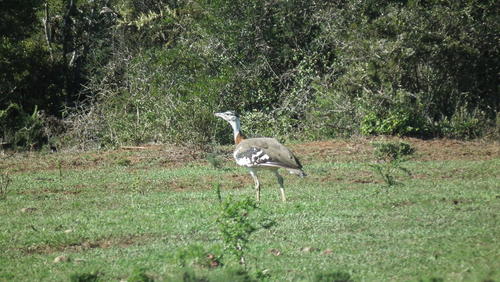
Denham's Bustard (Neotis denhami) Denham's Bustard
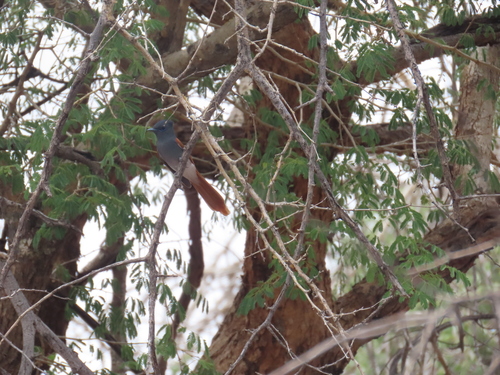
African Paradise-Flycatcher (Terpsiphone viridis) African Paradise-Flycatcher

Media

Loading…

In short

Denham's Bustard and the African Paradise-Flycatcher are easily distinguished by size and plumage. Denham's Bustard is a large, ground-dwelling bird, while the African Paradise-Flycatcher is a much smaller, arboreal species with distinctive long tail feathers in males.

Identification tips

  1. Size and Shape: Denham's Bustard is much larger and bulkier. 2. Tail: Look for the long, flowing tail of the male African Paradise-Flycatcher. 3. Habitat: Note the environment; bustards are on the ground in open areas, flycatchers in trees. 4. Plumage: Bustards have a more muted color palette, while flycatchers are more vibrant. 5. Behavior: Bustards walk slowly on the ground; flycatchers are agile and active in trees.

Size

Denham's Bustard is significantly larger, standing tall with a robust body, whereas the African Paradise-Flycatcher is small and slender.

Plumage

Denham's Bustard has a predominantly brown and white plumage with a striking black crest, while the African Paradise-Flycatcher features a vivid rufous or white body with a contrasting black head and long tail feathers in males.

Behaviour

Denham's Bustard is typically seen walking on open grasslands, often solitary or in small groups. In contrast, the African Paradise-Flycatcher is active in the canopy, flitting between branches and often seen in pairs.

Habitat

Denham's Bustard prefers open grasslands and savannas, while the African Paradise-Flycatcher inhabits wooded areas, gardens, and forest edges.

Voice

Denham's Bustard is generally silent, while the African Paradise-Flycatcher is known for its melodious and varied calls.

Submit a better description

Use the same sections as the comparison. Your text is published immediately.

Denham's Bustard and the African Paradise-Flycatcher are easily distinguished by size and plumage. Denham's Bustard is a large, ground-dwelling bird, while the African Paradise-Flycatcher is a much smaller, arboreal species with distinctive long tail feathers in males.

  1. Size and Shape: Denham's Bustard is much larger and bulkier. 2. Tail: Look for the long, flowing tail of the male African Paradise-Flycatcher. 3. Habitat: Note the environment; bustards are on the ground in open areas, flycatchers in trees. 4. Plumage: Bustards have a more muted color palette, while flycatchers are more vibrant. 5. Behavior: Bustards walk slowly on the ground; flycatchers are agile and active in trees.

Denham's Bustard is significantly larger, standing tall with a robust body, whereas the African Paradise-Flycatcher is small and slender.

Denham's Bustard has a predominantly brown and white plumage with a striking black crest, while the African Paradise-Flycatcher features a vivid rufous or white body with a contrasting black head and long tail feathers in males.

Denham's Bustard is typically seen walking on open grasslands, often solitary or in small groups. In contrast, the African Paradise-Flycatcher is active in the canopy, flitting between branches and often seen in pairs.

Denham's Bustard prefers open grasslands and savannas, while the African Paradise-Flycatcher inhabits wooded areas, gardens, and forest edges.

Denham's Bustard is generally silent, while the African Paradise-Flycatcher is known for its melodious and varied calls.

Discard your changes?

You have unsaved edits. If you leave now, those changes will be lost.

Denham's Bustard · African Paradise-Flycatcher · My Tricky Birds