Birdr

Desert Cisticola vs Familiar Chat

Cisticola aridulus versus Oenanthe familiaris

Play a quiz with Desert Cisticola and Familiar Chat
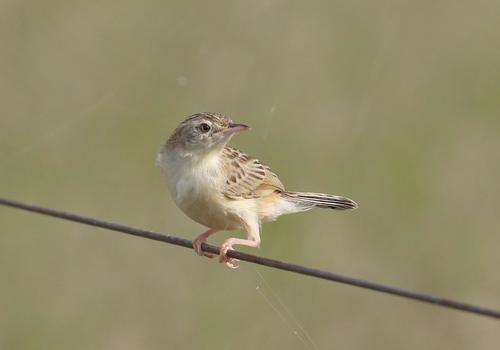
Desert Cisticola (Cisticola aridulus) Desert Cisticola
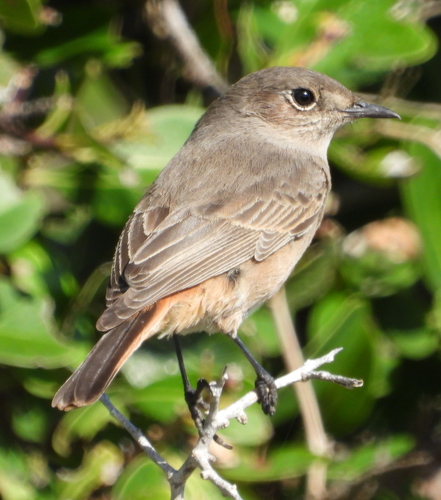
Familiar Chat (Oenanthe familiaris) Familiar Chat

Media

Loading…

In short

The Desert Cisticola and Familiar Chat can be distinguished by their size and habitat preference. The Desert Cisticola is smaller and more often found in grasslands, while the Familiar Chat is larger and prefers rocky or arid environments. Plumage differences are subtle, so focus on size and habitat for identification.

Identification tips

  1. Size: Use size as a primary clue; the Desert Cisticola is smaller. 2. Habitat: Consider the habitat; Desert Cisticola in grasslands, Familiar Chat in rocky areas. 3. Plumage: Look for the white rump of the Familiar Chat in flight. 4. Behavior: Note the perching behavior; Familiar Chats often perch on rocks. 5. Vocalization: Listen for the insect-like song of the Desert Cisticola versus the varied calls of the Familiar Chat.

Size

The Desert Cisticola is smaller, typically around 10-11 cm, whereas the Familiar Chat is larger, about 14-15 cm.

Plumage

The Desert Cisticola has a more uniform brownish plumage with a slightly streaked crown, while the Familiar Chat has a more varied plumage with a paler underbelly and a distinct white rump visible in flight.

Behaviour

Desert Cisticolas are often seen flitting low over grasslands, while Familiar Chats are more likely to be observed perching on rocks or hopping on the ground in open, arid areas.

Habitat

Desert Cisticolas prefer open grasslands and savannas, whereas Familiar Chats are found in rocky, arid environments and sometimes near human settlements.

Voice

The Desert Cisticola has a repetitive, insect-like song, while the Familiar Chat's vocalizations are more varied, including melodious whistles and chatters.

Submit a better description

Use the same sections as the comparison. Your text is published immediately.

The Desert Cisticola and Familiar Chat can be distinguished by their size and habitat preference. The Desert Cisticola is smaller and more often found in grasslands, while the Familiar Chat is larger and prefers rocky or arid environments. Plumage differences are subtle, so focus on size and habitat for identification.

  1. Size: Use size as a primary clue; the Desert Cisticola is smaller. 2. Habitat: Consider the habitat; Desert Cisticola in grasslands, Familiar Chat in rocky areas. 3. Plumage: Look for the white rump of the Familiar Chat in flight. 4. Behavior: Note the perching behavior; Familiar Chats often perch on rocks. 5. Vocalization: Listen for the insect-like song of the Desert Cisticola versus the varied calls of the Familiar Chat.

The Desert Cisticola is smaller, typically around 10-11 cm, whereas the Familiar Chat is larger, about 14-15 cm.

The Desert Cisticola has a more uniform brownish plumage with a slightly streaked crown, while the Familiar Chat has a more varied plumage with a paler underbelly and a distinct white rump visible in flight.

Desert Cisticolas are often seen flitting low over grasslands, while Familiar Chats are more likely to be observed perching on rocks or hopping on the ground in open, arid areas.

Desert Cisticolas prefer open grasslands and savannas, whereas Familiar Chats are found in rocky, arid environments and sometimes near human settlements.

The Desert Cisticola has a repetitive, insect-like song, while the Familiar Chat's vocalizations are more varied, including melodious whistles and chatters.

Discard your changes?

You have unsaved edits. If you leave now, those changes will be lost.

Desert Cisticola · Familiar Chat · My Tricky Birds