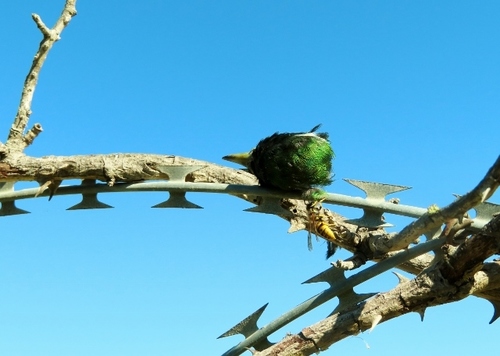
Birdr

Dideric Cuckoo vs Klaas's Cuckoo

Chrysococcyx caprius versus Chrysococcyx klaas

Play a quiz with Dideric Cuckoo and Klaas's Cuckoo
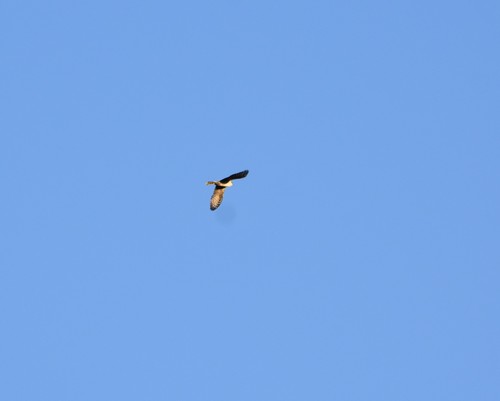
Dideric Cuckoo (Chrysococcyx caprius) Dideric Cuckoo
Klaas's Cuckoo (Chrysococcyx klaas) Klaas's Cuckoo

Media

Loading…

In short

The Dideric Cuckoo and Klaas's Cuckoo are both small, iridescent green cuckoos, but they can be distinguished by their underparts and eye markings. Dideric Cuckoo has a white belly with green bars and a distinct white spot behind the eye, while Klaas's Cuckoo has a plain white belly and lacks the eye spot.

Identification tips

1. Look for the white spot behind the eye on Dideric Cuckoo. 2. Check the belly: Dideric has green bars, Klaas's is plain white. 3. Listen for calls if visible features are unclear, but use with caution due to overlap. 4. Note the habitat; both species prefer similar environments but avoid dense forests.

Size

Both species are similar in size, typical of small cuckoos.

Plumage

Dideric Cuckoo males have a brilliant, iridescent green back with a white belly featuring green bars and a white spot behind the eye. Females are gray-brown with barred green backs and a white belly with thin brown bars. Klaas's Cuckoo males also have an iridescent green back but with a plain white belly and no eye spot. Females are similar but lack the barred pattern.

Behaviour

Both species are brood parasites, often seen in similar habitats, and exhibit similar behaviors in terms of foraging and movement.

Habitat

Both species inhabit open woodlands, forest edges, savannas, and gardens, avoiding dense forests.

Voice

Vocalizations differ but are not the most reliable field marks due to variability and overlap. Dideric Cuckoo's call is a repetitive 'dee-dee-dee,' while Klaas's Cuckoo's call is a more melodic 'klaas-klaas-klaas.'

Submit a better description

Use the same sections as the comparison. Your text is published immediately.

The Dideric Cuckoo and Klaas's Cuckoo are both small, iridescent green cuckoos, but they can be distinguished by their underparts and eye markings. Dideric Cuckoo has a white belly with green bars and a distinct white spot behind the eye, while Klaas's Cuckoo has a plain white belly and lacks the eye spot.

1. Look for the white spot behind the eye on Dideric Cuckoo. 2. Check the belly: Dideric has green bars, Klaas's is plain white. 3. Listen for calls if visible features are unclear, but use with caution due to overlap. 4. Note the habitat; both species prefer similar environments but avoid dense forests.

Both species are similar in size, typical of small cuckoos.

Dideric Cuckoo males have a brilliant, iridescent green back with a white belly featuring green bars and a white spot behind the eye. Females are gray-brown with barred green backs and a white belly with thin brown bars. Klaas's Cuckoo males also have an iridescent green back but with a plain white belly and no eye spot. Females are similar but lack the barred pattern.

Both species are brood parasites, often seen in similar habitats, and exhibit similar behaviors in terms of foraging and movement.

Both species inhabit open woodlands, forest edges, savannas, and gardens, avoiding dense forests.

Vocalizations differ but are not the most reliable field marks due to variability and overlap. Dideric Cuckoo's call is a repetitive 'dee-dee-dee,' while Klaas's Cuckoo's call is a more melodic 'klaas-klaas-klaas.'

Discard your changes?

You have unsaved edits. If you leave now, those changes will be lost.

Dideric Cuckoo · Klaas's Cuckoo · My Tricky Birds