Birdr

Dot-winged Antwren vs Chestnut-backed Antbird

Microrhopias quixensis versus Poliocrania exsul

Play a quiz with Dot-winged Antwren and Chestnut-backed Antbird
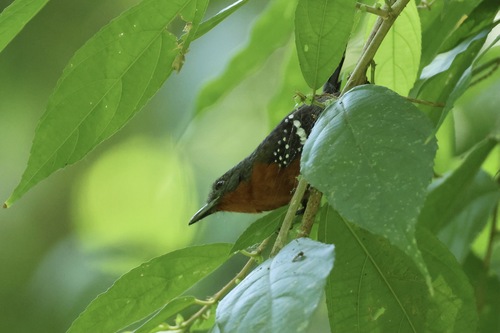
Dot-winged Antwren (Microrhopias quixensis) Dot-winged Antwren
Chestnut-backed Antbird (Poliocrania exsul) Chestnut-backed Antbird

Media

Loading…

In short

The Dot-winged Antwren and Chestnut-backed Antbird are both small, forest-dwelling birds, but they can be distinguished by their plumage and behavior. The Dot-winged Antwren is noted for its distinct white wing spots and its tendency to join mixed-species flocks, while the Chestnut-backed Antbird has a rich chestnut back and is often found near army-ant swarms.

Identification tips

Look for white wing spots on the Dot-winged Antwren, especially when in mixed flocks. Note the chestnut back of the Chestnut-backed Antbird, particularly near ant swarms. Consider habitat and flocking behavior as additional clues.

Size

Both species are small, but the Dot-winged Antwren is generally more slender, whereas the Chestnut-backed Antbird appears stockier.

Plumage

The Dot-winged Antwren has white spots on its wings, which are a key distinguishing feature. In contrast, the Chestnut-backed Antbird has a chestnut back and lacks the wing spots.

Behaviour

Dot-winged Antwrens often join mixed-species flocks, whereas Chestnut-backed Antbirds are more solitary and frequently associate with army-ant swarms.

Habitat

Dot-winged Antwrens prefer the midstory of lowland and foothill forests, including second growth, while Chestnut-backed Antbirds can thrive in small forest patches and fragmented landscapes.

Voice

Vocalizations differ, but specific calls are not detailed in the sources. Observers should listen for differences in song patterns.

Submit a better description

Use the same sections as the comparison. Your text is published immediately.

The Dot-winged Antwren and Chestnut-backed Antbird are both small, forest-dwelling birds, but they can be distinguished by their plumage and behavior. The Dot-winged Antwren is noted for its distinct white wing spots and its tendency to join mixed-species flocks, while the Chestnut-backed Antbird has a rich chestnut back and is often found near army-ant swarms.

Look for white wing spots on the Dot-winged Antwren, especially when in mixed flocks. Note the chestnut back of the Chestnut-backed Antbird, particularly near ant swarms. Consider habitat and flocking behavior as additional clues.

Both species are small, but the Dot-winged Antwren is generally more slender, whereas the Chestnut-backed Antbird appears stockier.

The Dot-winged Antwren has white spots on its wings, which are a key distinguishing feature. In contrast, the Chestnut-backed Antbird has a chestnut back and lacks the wing spots.

Dot-winged Antwrens often join mixed-species flocks, whereas Chestnut-backed Antbirds are more solitary and frequently associate with army-ant swarms.

Dot-winged Antwrens prefer the midstory of lowland and foothill forests, including second growth, while Chestnut-backed Antbirds can thrive in small forest patches and fragmented landscapes.

Vocalizations differ, but specific calls are not detailed in the sources. Observers should listen for differences in song patterns.

Discard your changes?

You have unsaved edits. If you leave now, those changes will be lost.

Dot-winged Antwren · Chestnut-backed Antbird · My Tricky Birds