Birdr

Double-toothed Kite vs Roadside Hawk

Harpagus bidentatus versus Rupornis magnirostris

Play a quiz with Double-toothed Kite and Roadside Hawk
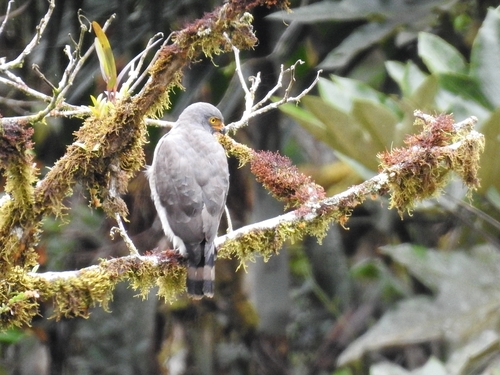
Double-toothed Kite (Harpagus bidentatus) Double-toothed Kite
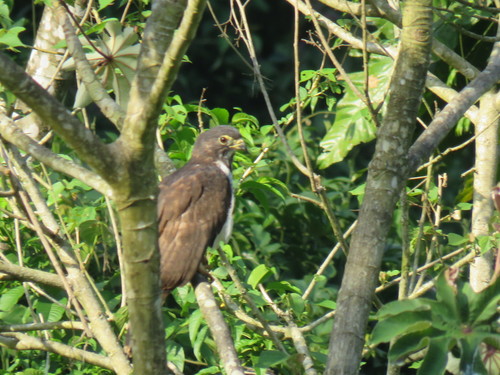
Roadside Hawk (Rupornis magnirostris) Roadside Hawk

Media

Loading…

In short

The Double-toothed Kite and Roadside Hawk can be distinguished by their behavior and plumage details. The Double-toothed Kite is known for its unique behavior of following monkey troops, while the Roadside Hawk is more commonly seen perched along roadsides. Key plumage differences include the Double-toothed Kite's white leg tufts and dark throat line.

Identification tips

  1. Look for the Double-toothed Kite's white leg tufts and dark throat line. 2. Observe behavior: Double-toothed Kites follow monkey troops, while Roadside Hawks perch along roads. 3. Note habitat: Roadside Hawks are more often in open areas, whereas Double-toothed Kites prefer forests.

Size

The Roadside Hawk is generally larger than the Double-toothed Kite, with a more robust build.

Plumage

The Double-toothed Kite has distinctive white leg tufts and a dark line down the throat, while the Roadside Hawk lacks these features and typically shows more uniform coloration.

Behaviour

The Double-toothed Kite often follows monkey troops to catch flushed prey, whereas the Roadside Hawk is frequently seen perched along roadsides or open areas.

Habitat

Both species inhabit the Neotropics, but the Roadside Hawk is more adaptable to open and semi-open areas, while the Double-toothed Kite prefers forested environments.

Voice

Vocalizations are not a primary distinguishing factor between these species in the field.

Submit a better description

Use the same sections as the comparison. Your text is published immediately.

The Double-toothed Kite and Roadside Hawk can be distinguished by their behavior and plumage details. The Double-toothed Kite is known for its unique behavior of following monkey troops, while the Roadside Hawk is more commonly seen perched along roadsides. Key plumage differences include the Double-toothed Kite's white leg tufts and dark throat line.

  1. Look for the Double-toothed Kite's white leg tufts and dark throat line. 2. Observe behavior: Double-toothed Kites follow monkey troops, while Roadside Hawks perch along roads. 3. Note habitat: Roadside Hawks are more often in open areas, whereas Double-toothed Kites prefer forests.

The Roadside Hawk is generally larger than the Double-toothed Kite, with a more robust build.

The Double-toothed Kite has distinctive white leg tufts and a dark line down the throat, while the Roadside Hawk lacks these features and typically shows more uniform coloration.

The Double-toothed Kite often follows monkey troops to catch flushed prey, whereas the Roadside Hawk is frequently seen perched along roadsides or open areas.

Both species inhabit the Neotropics, but the Roadside Hawk is more adaptable to open and semi-open areas, while the Double-toothed Kite prefers forested environments.

Vocalizations are not a primary distinguishing factor between these species in the field.

Discard your changes?

You have unsaved edits. If you leave now, those changes will be lost.

Double-toothed Kite · Roadside Hawk · My Tricky Birds