Birdr

Drakensberg Prinia vs Capped Wheatear

Prinia hypoxantha versus Oenanthe pileata

Play a quiz with Drakensberg Prinia and Capped Wheatear

Drakensberg Prinia (Prinia hypoxantha) Drakensberg Prinia
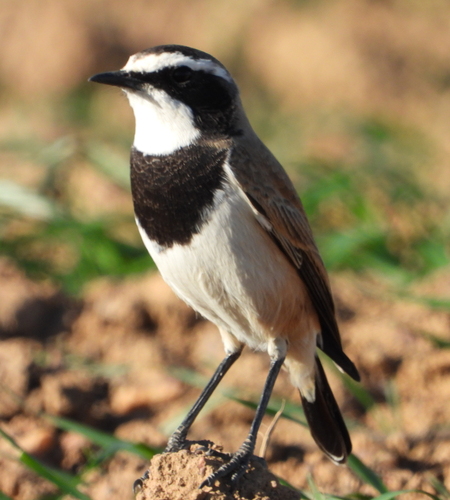
Capped Wheatear (Oenanthe pileata) Capped Wheatear

Media

Loading…

In short

The Drakensberg Prinia and Capped Wheatear are distinct in both structure and habitat. The prinia is a small, slender bird with a long tail, while the wheatear is larger with a more robust build and a distinctive black cap. These species are unlikely to be confused in the field if observed closely.

Identification tips

1. Location and habitat: Check the habitat; prinias are in montane areas, wheatears in open, arid regions. 2. Head markings: Look for the wheatear's black cap. 3. Tail pattern: Wheatears have a distinctive black and white tail. 4. Behavior: Note the prinia's preference for dense vegetation versus the wheatear's ground-dwelling habits. 5. Vocalizations: Listen for the prinia's rapid notes versus the wheatear's varied whistles.

Size

The Drakensberg Prinia is smaller and more slender than the Capped Wheatear, which is larger and more robust.

Plumage

The prinia has a generally brownish plumage with a long tail and lacks any striking head markings. In contrast, the wheatear has a distinctive black cap, white underparts, and a contrasting black and white tail pattern.

Behaviour

Prinias are often seen flitting through dense vegetation, while wheatears are more likely to be observed on the ground or perched on rocks in open areas.

Habitat

Drakensberg Prinias are typically found in montane grasslands and shrublands, whereas Capped Wheatears prefer open, arid environments such as savannas and semi-deserts.

Voice

The prinia's song is a series of high-pitched, rapid notes, while the wheatear's vocalizations include a variety of whistles and chatters. These vocal differences can be useful in distinguishing the two species.

Submit a better description

Use the same sections as the comparison. Your text is published immediately.

The Drakensberg Prinia and Capped Wheatear are distinct in both structure and habitat. The prinia is a small, slender bird with a long tail, while the wheatear is larger with a more robust build and a distinctive black cap. These species are unlikely to be confused in the field if observed closely.

1. Location and habitat: Check the habitat; prinias are in montane areas, wheatears in open, arid regions. 2. Head markings: Look for the wheatear's black cap. 3. Tail pattern: Wheatears have a distinctive black and white tail. 4. Behavior: Note the prinia's preference for dense vegetation versus the wheatear's ground-dwelling habits. 5. Vocalizations: Listen for the prinia's rapid notes versus the wheatear's varied whistles.

The Drakensberg Prinia is smaller and more slender than the Capped Wheatear, which is larger and more robust.

The prinia has a generally brownish plumage with a long tail and lacks any striking head markings. In contrast, the wheatear has a distinctive black cap, white underparts, and a contrasting black and white tail pattern.

Prinias are often seen flitting through dense vegetation, while wheatears are more likely to be observed on the ground or perched on rocks in open areas.

Drakensberg Prinias are typically found in montane grasslands and shrublands, whereas Capped Wheatears prefer open, arid environments such as savannas and semi-deserts.

The prinia's song is a series of high-pitched, rapid notes, while the wheatear's vocalizations include a variety of whistles and chatters. These vocal differences can be useful in distinguishing the two species.

Discard your changes?

You have unsaved edits. If you leave now, those changes will be lost.

Drakensberg Prinia · Capped Wheatear · My Tricky Birds