Birdr

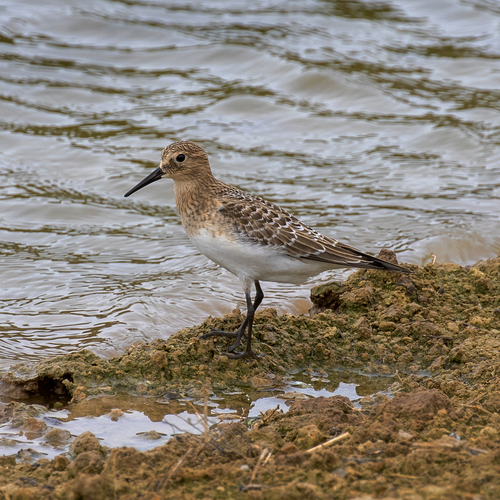
Dunlin vs Baird's Sandpiper

Calidris alpina versus Calidris bairdii

Play a quiz with Dunlin and Baird's Sandpiper
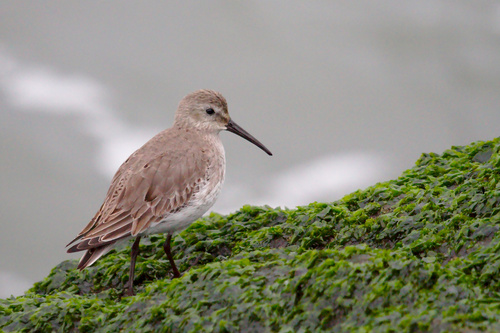
Dunlin (Calidris alpina) Dunlin
Baird's Sandpiper (Calidris bairdii) Baird's Sandpiper

Media

Loading…

In short

Dunlin and Baird's Sandpiper can be differentiated by their structure and plumage. Dunlin has a slightly longer, down-curved bill and a distinctive black belly patch in breeding plumage, while Baird's Sandpiper has a shorter, straighter bill and lacks the black belly.

Identification tips

Size

Dunlin is slightly larger and stockier compared to the more slender Baird's Sandpiper.

Plumage

In breeding plumage, Dunlin displays a black belly patch and rufous back, while Baird's Sandpiper has a more uniform brownish back without the black belly. In non-breeding plumage, both are grayish but Dunlin remains slightly darker.

Behaviour

Both species forage by probing in mudflats, but Dunlin often occurs in larger flocks compared to the typically solitary or small-group foraging Baird's Sandpiper.

Habitat

Dunlin is more commonly found in coastal estuaries during winter, while Baird's Sandpiper prefers inland tundra habitats during breeding and migrates through grasslands.

Voice

Vocalizations are not a primary differentiator in the field; however, Dunlin's call is a soft trill, while Baird's Sandpiper has a more musical, whistled call.

Submit a better description

Use the same sections as the comparison. Your text is published immediately.

Dunlin and Baird's Sandpiper can be differentiated by their structure and plumage. Dunlin has a slightly longer, down-curved bill and a distinctive black belly patch in breeding plumage, while Baird's Sandpiper has a shorter, straighter bill and lacks the black belly.

  • Bill shape: Dunlin has a longer, down-curved bill; Baird's Sandpiper's bill is shorter and straighter.
  • Breeding plumage: Look for Dunlin's black belly patch.
  • Size and structure: Dunlin appears stockier; Baird's Sandpiper is more slender.
  • Habitat preference: Dunlin in coastal areas; Baird's Sandpiper in inland tundra or grasslands during migration.
  • Flock size: Dunlin often in large flocks; Baird's Sandpiper usually solitary or in small groups.

Dunlin is slightly larger and stockier compared to the more slender Baird's Sandpiper.

In breeding plumage, Dunlin displays a black belly patch and rufous back, while Baird's Sandpiper has a more uniform brownish back without the black belly. In non-breeding plumage, both are grayish but Dunlin remains slightly darker.

Both species forage by probing in mudflats, but Dunlin often occurs in larger flocks compared to the typically solitary or small-group foraging Baird's Sandpiper.

Dunlin is more commonly found in coastal estuaries during winter, while Baird's Sandpiper prefers inland tundra habitats during breeding and migrates through grasslands.

Vocalizations are not a primary differentiator in the field; however, Dunlin's call is a soft trill, while Baird's Sandpiper has a more musical, whistled call.

Discard your changes?

You have unsaved edits. If you leave now, those changes will be lost.

Dunlin · Baird's Sandpiper · My Tricky Birds