Birdr

Dunlin vs Pectoral Sandpiper

Calidris alpina versus Calidris melanotos

Play a quiz with Dunlin and Pectoral Sandpiper
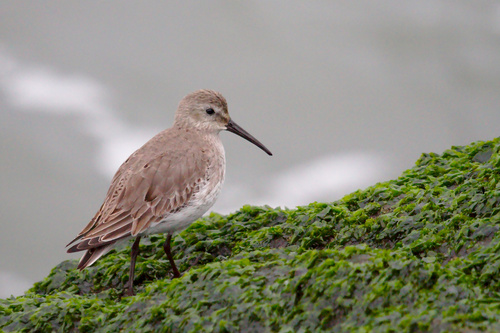
Dunlin (Calidris alpina) Dunlin
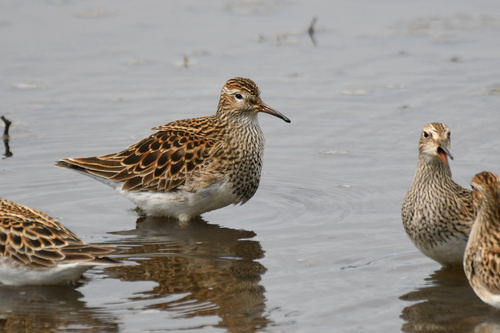
Pectoral Sandpiper (Calidris melanotos) Pectoral Sandpiper

Media

Loading…

In short

The Dunlin is best identified by its distinctive black belly patch during breeding season and its rufous back, while the Pectoral Sandpiper lacks this feature and instead has a streaked breast sharply contrasting with its white belly. In non-breeding plumage, Dunlins are gray and often seen in large flocks, whereas Pectoral Sandpipers maintain their streaked appearance.

Identification tips

Look for the black belly patch on Dunlins during breeding season. In winter, note the gray plumage of Dunlins compared to the streaked breast of Pectoral Sandpipers. Listen for the Pectoral Sandpiper's hollow hoots during displays.

Plumage

Dunlins have a black belly patch and rufous back in breeding plumage, turning gray in winter. Pectoral Sandpipers have a streaked breast sharply contrasting with a white belly, which remains consistent year-round.

Habitat

Dunlins are typically found in large estuaries along the coasts during winter, while Pectoral Sandpipers migrate through central North America to winter in South America.

Voice

Pectoral Sandpipers produce a series of hollow hoots during their unique display, a sound not associated with Dunlins.

Submit a better description

Use the same sections as the comparison. Your text is published immediately.

The Dunlin is best identified by its distinctive black belly patch during breeding season and its rufous back, while the Pectoral Sandpiper lacks this feature and instead has a streaked breast sharply contrasting with its white belly. In non-breeding plumage, Dunlins are gray and often seen in large flocks, whereas Pectoral Sandpipers maintain their streaked appearance.

Look for the black belly patch on Dunlins during breeding season. In winter, note the gray plumage of Dunlins compared to the streaked breast of Pectoral Sandpipers. Listen for the Pectoral Sandpiper's hollow hoots during displays.

Dunlins have a black belly patch and rufous back in breeding plumage, turning gray in winter. Pectoral Sandpipers have a streaked breast sharply contrasting with a white belly, which remains consistent year-round.

Dunlins are typically found in large estuaries along the coasts during winter, while Pectoral Sandpipers migrate through central North America to winter in South America.

Pectoral Sandpipers produce a series of hollow hoots during their unique display, a sound not associated with Dunlins.

Discard your changes?

You have unsaved edits. If you leave now, those changes will be lost.

Dunlin · Pectoral Sandpiper · My Tricky Birds