Birdr

Dunlin vs Western Sandpiper

Calidris alpina versus Calidris mauri

Play a quiz with Dunlin and Western Sandpiper
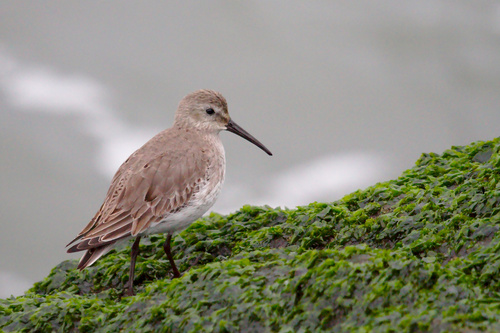
Dunlin (Calidris alpina) Dunlin
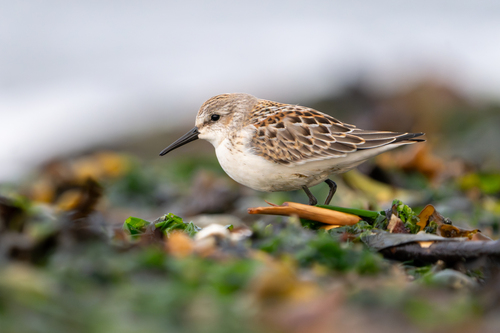
Western Sandpiper (Calidris mauri) Western Sandpiper

Media

Loading…

In short

Dunlin and Western Sandpiper can be distinguished by bill shape and plumage details. Dunlin has a slightly longer, more decurved bill and a distinctive black belly patch in breeding plumage, while Western Sandpiper has a shorter, straighter bill and lacks the black belly patch.

Identification tips

  1. Bill shape: Dunlin's bill is longer and more decurved. 2. Breeding plumage: Look for Dunlin's black belly patch. 3. Size: Dunlin is larger and bulkier. 4. Habitat: Consider the location; Dunlin is more coastal in winter. 5. Flock size: Dunlin often forms larger flocks.

Size

Dunlin is generally larger and bulkier than the Western Sandpiper.

Plumage

In breeding plumage, Dunlin shows a black belly patch and rufous back, whereas Western Sandpiper lacks the black belly and has a more uniform rufous wash on the head and back. In non-breeding plumage, both species are gray but Dunlin appears more nondescript.

Behaviour

Both species forage by probing mudflats, but Dunlin often occurs in larger flocks and may be seen inland during midwinter.

Habitat

Dunlin prefers large estuaries and coastal areas, while Western Sandpiper is more likely to be found on mudflats and sandy beaches.

Voice

Both species have similar calls, but specific vocal differences are not well-documented in the sources.

Submit a better description

Use the same sections as the comparison. Your text is published immediately.

Dunlin and Western Sandpiper can be distinguished by bill shape and plumage details. Dunlin has a slightly longer, more decurved bill and a distinctive black belly patch in breeding plumage, while Western Sandpiper has a shorter, straighter bill and lacks the black belly patch.

  1. Bill shape: Dunlin's bill is longer and more decurved. 2. Breeding plumage: Look for Dunlin's black belly patch. 3. Size: Dunlin is larger and bulkier. 4. Habitat: Consider the location; Dunlin is more coastal in winter. 5. Flock size: Dunlin often forms larger flocks.

Dunlin is generally larger and bulkier than the Western Sandpiper.

In breeding plumage, Dunlin shows a black belly patch and rufous back, whereas Western Sandpiper lacks the black belly and has a more uniform rufous wash on the head and back. In non-breeding plumage, both species are gray but Dunlin appears more nondescript.

Both species forage by probing mudflats, but Dunlin often occurs in larger flocks and may be seen inland during midwinter.

Dunlin prefers large estuaries and coastal areas, while Western Sandpiper is more likely to be found on mudflats and sandy beaches.

Both species have similar calls, but specific vocal differences are not well-documented in the sources.

Discard your changes?

You have unsaved edits. If you leave now, those changes will be lost.

Dunlin · Western Sandpiper · My Tricky Birds