Birdr

Dusky-capped Flycatcher vs Ash-throated Flycatcher

Myiarchus tuberculifer versus Myiarchus cinerascens

Play a quiz with Dusky-capped Flycatcher and Ash-throated Flycatcher
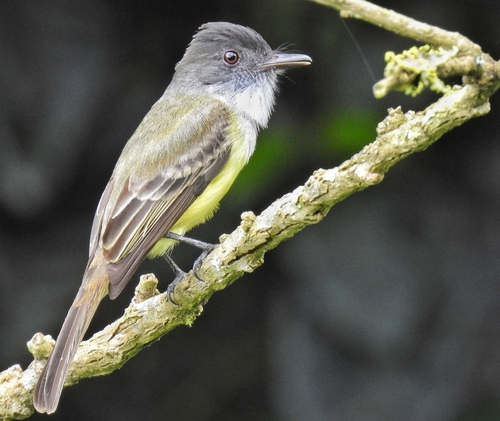
Dusky-capped Flycatcher (Myiarchus tuberculifer) Dusky-capped Flycatcher
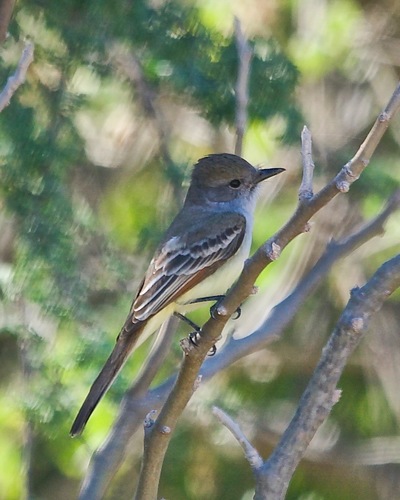
Ash-throated Flycatcher (Myiarchus cinerascens) Ash-throated Flycatcher

Media

Loading…

In short

The Dusky-capped Flycatcher and Ash-throated Flycatcher are similar Myiarchus flycatchers, but can be distinguished by subtle differences in plumage and vocalizations. The Dusky-capped Flycatcher is generally darker with a more pronounced dusky cap, while the Ash-throated Flycatcher has a paler throat and overall lighter appearance.

Identification tips

  1. Listen for calls: Dusky-capped's 'wheer' vs. Ash-throated's 'ka-brick'. 2. Check plumage: Dusky-capped is darker with a dusky cap; Ash-throated is paler with a lighter throat. 3. Consider habitat: Dusky-capped prefers more forested areas; Ash-throated is found in open woodlands and desert scrub. 4. Observe behavior: Both species exhibit typical flycatcher behavior, but habitat preference can guide identification.

Size

Both species are similar in size, typical of Myiarchus flycatchers, with no significant size difference to aid in field identification.

Plumage

The Dusky-capped Flycatcher has a more pronounced dusky cap and darker overall plumage. In contrast, the Ash-throated Flycatcher features a paler throat and lighter plumage, particularly on the underparts. Both species have rufous in the tail and wings, but the Ash-throated Flycatcher tends to appear more washed out.

Behaviour

Both species exhibit similar behaviors typical of Myiarchus flycatchers, such as perching conspicuously and sallying for insects. They are cavity-nesters and can be seen maintaining territories.

Habitat

The Dusky-capped Flycatcher is more commonly found in tropical and subtropical forests, while the Ash-throated Flycatcher prefers open woodlands and desert scrub in the American West. Overlap occurs in some areas, particularly in the southern United States.

Voice

The Dusky-capped Flycatcher has a distinctive, mournful 'wheer' call, which is a key identifier. The Ash-throated Flycatcher has a softer, less emphatic call, often described as a 'ka-brick' or 'ka-brick-it'.

Submit a better description

Use the same sections as the comparison. Your text is published immediately.

The Dusky-capped Flycatcher and Ash-throated Flycatcher are similar Myiarchus flycatchers, but can be distinguished by subtle differences in plumage and vocalizations. The Dusky-capped Flycatcher is generally darker with a more pronounced dusky cap, while the Ash-throated Flycatcher has a paler throat and overall lighter appearance.

  1. Listen for calls: Dusky-capped's 'wheer' vs. Ash-throated's 'ka-brick'. 2. Check plumage: Dusky-capped is darker with a dusky cap; Ash-throated is paler with a lighter throat. 3. Consider habitat: Dusky-capped prefers more forested areas; Ash-throated is found in open woodlands and desert scrub. 4. Observe behavior: Both species exhibit typical flycatcher behavior, but habitat preference can guide identification.

Both species are similar in size, typical of Myiarchus flycatchers, with no significant size difference to aid in field identification.

The Dusky-capped Flycatcher has a more pronounced dusky cap and darker overall plumage. In contrast, the Ash-throated Flycatcher features a paler throat and lighter plumage, particularly on the underparts. Both species have rufous in the tail and wings, but the Ash-throated Flycatcher tends to appear more washed out.

Both species exhibit similar behaviors typical of Myiarchus flycatchers, such as perching conspicuously and sallying for insects. They are cavity-nesters and can be seen maintaining territories.

The Dusky-capped Flycatcher is more commonly found in tropical and subtropical forests, while the Ash-throated Flycatcher prefers open woodlands and desert scrub in the American West. Overlap occurs in some areas, particularly in the southern United States.

The Dusky-capped Flycatcher has a distinctive, mournful 'wheer' call, which is a key identifier. The Ash-throated Flycatcher has a softer, less emphatic call, often described as a 'ka-brick' or 'ka-brick-it'.

Discard your changes?

You have unsaved edits. If you leave now, those changes will be lost.

Dusky-capped Flycatcher · Ash-throated Flycatcher · My Tricky Birds