Birdr

Dusky-capped Flycatcher vs Panama Flycatcher

Myiarchus tuberculifer versus Myiarchus panamensis

Play a quiz with Dusky-capped Flycatcher and Panama Flycatcher
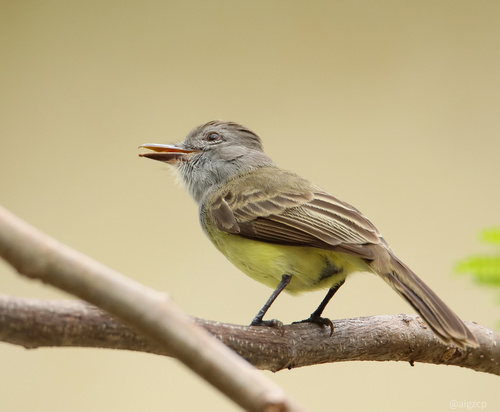
Dusky-capped Flycatcher (Myiarchus tuberculifer) Dusky-capped Flycatcher
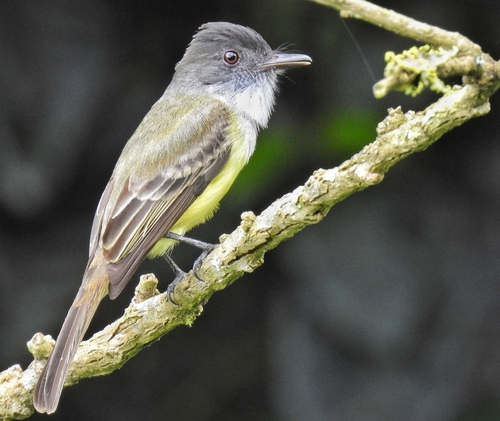
Panama Flycatcher (Myiarchus panamensis) Panama Flycatcher

Media

Loading…

In short

The Dusky-capped Flycatcher and Panama Flycatcher are both part of the Myiarchus genus, making them challenging to distinguish by plumage alone. The most reliable field mark is their vocalizations, which differ significantly. Observing behavior and habitat preferences can also aid in identification.

Identification tips

1. Listen for vocalizations: Dusky-capped Flycatcher has a mournful whistle; Panama Flycatcher has a sharper call. 2. Observe habitat: Dusky-capped in varied wooded areas; Panama often in open areas. 3. Note behavior: Dusky-capped is more secretive. 4. Use plumage as a last resort: Subtle differences in cap coloration are unreliable.

Size

Both species are similar in size, typical of Myiarchus flycatchers, with no significant differences in structure or proportions.

Plumage

Plumage differences are subtle; both species have a generally brownish-olive upper body with a paler yellowish underbody. The Dusky-capped Flycatcher may have a slightly duskier cap, but this is not a reliable field mark.

Behaviour

Both species exhibit typical flycatcher behavior, often seen perching quietly before sallying out to catch insects. The Dusky-capped Flycatcher is known to be more secretive.

Habitat

The Dusky-capped Flycatcher is more adaptable, found in a variety of wooded habitats, while the Panama Flycatcher is often associated with more open areas and edges.

Voice

Vocalizations are the most reliable distinguishing feature. The Dusky-capped Flycatcher has a distinctive, mournful whistle, while the Panama Flycatcher’s call is sharper and more abrupt.

Submit a better description

Use the same sections as the comparison. Your text is published immediately.

The Dusky-capped Flycatcher and Panama Flycatcher are both part of the Myiarchus genus, making them challenging to distinguish by plumage alone. The most reliable field mark is their vocalizations, which differ significantly. Observing behavior and habitat preferences can also aid in identification.

1. Listen for vocalizations: Dusky-capped Flycatcher has a mournful whistle; Panama Flycatcher has a sharper call. 2. Observe habitat: Dusky-capped in varied wooded areas; Panama often in open areas. 3. Note behavior: Dusky-capped is more secretive. 4. Use plumage as a last resort: Subtle differences in cap coloration are unreliable.

Both species are similar in size, typical of Myiarchus flycatchers, with no significant differences in structure or proportions.

Plumage differences are subtle; both species have a generally brownish-olive upper body with a paler yellowish underbody. The Dusky-capped Flycatcher may have a slightly duskier cap, but this is not a reliable field mark.

Both species exhibit typical flycatcher behavior, often seen perching quietly before sallying out to catch insects. The Dusky-capped Flycatcher is known to be more secretive.

The Dusky-capped Flycatcher is more adaptable, found in a variety of wooded habitats, while the Panama Flycatcher is often associated with more open areas and edges.

Vocalizations are the most reliable distinguishing feature. The Dusky-capped Flycatcher has a distinctive, mournful whistle, while the Panama Flycatcher’s call is sharper and more abrupt.

Discard your changes?

You have unsaved edits. If you leave now, those changes will be lost.

Dusky-capped Flycatcher · Panama Flycatcher · My Tricky Birds