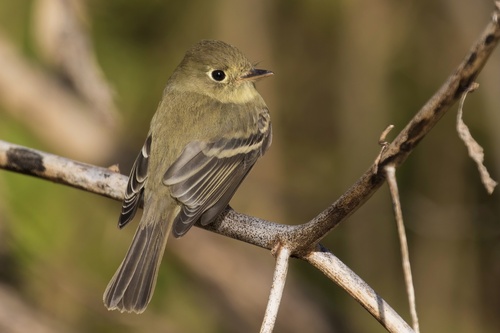
Dusky Flycatcher vs Western Flycatcher
Empidonax oberholseri versus Empidonax difficilis
Play a quiz with Dusky Flycatcher and Western Flycatcher
Dusky Flycatcher
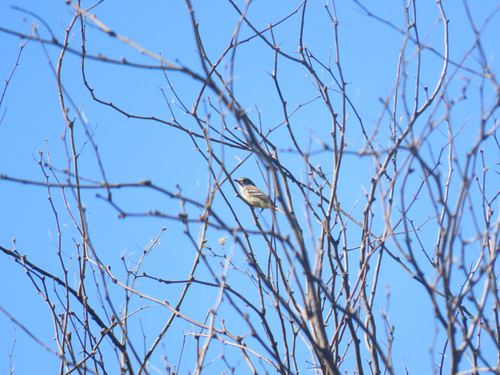
Western Flycatcher
In short
The Dusky Flycatcher and Western Flycatcher are both small Empidonax flycatchers that are challenging to differentiate in the field. Key differences include subtle variations in plumage and vocalizations, with structural features being the most reliable for identification.
Identification tips
- Structure: Look for the Dusky Flycatcher's slightly shorter primary projection compared to the Western Flycatcher. 2. Plumage: Note the overall color tone; Dusky tends to be grayer, Western more olive. 3. Vocalizations: Listen for the Dusky's 'whit' call versus the Western's more complex song. 4. Habitat: Consider the habitat; Dusky prefers open woodlands, Western favors moist forests. 5. Season: Be aware of seasonal movements, as both species can overlap during migration.
Size
Both species are similar in size, typical of small Empidonax flycatchers.
Plumage
Dusky Flycatchers tend to have a more grayish overall appearance, while Western Flycatchers often show a more olive tone, especially on the back and head. Both species have pale eye-rings and wing bars, but these can be variable and are not always reliable for identification.
Behaviour
Both species exhibit typical flycatcher behavior, primarily foraging by sallying from perches to catch insects. The Dusky Flycatcher is noted for its sit-and-wait predation strategy.
Habitat
Dusky Flycatchers are often found in open woodlands and forest edges, while Western Flycatchers prefer moist, shaded forests, often near streams. However, there can be overlap in their ranges, especially during migration.
Voice
Vocalizations are a key differentiator: Dusky Flycatchers have a distinctive 'whit' call, whereas Western Flycatchers have a more complex song and varied calls. However, vocalizations can vary and may overlap, making them less reliable without experience.