Dusky Grouse vs Sooty Grouse
Dendragapus obscurus versus Dendragapus fuliginosus
Play a quiz with Dusky Grouse and Sooty Grouse
Dusky Grouse
Sooty Grouse
In short
Dusky Grouse and Sooty Grouse are closely related and were once considered the same species. They are best distinguished by their habitat preferences and subtle plumage differences. Vocalizations can also help, especially during the breeding season.
Identification tips
- Habitat: Note the type of forest; Dusky Grouse are more likely in drier montane forests, while Sooty Grouse prefer moist coastal and subalpine forests.
- Plumage: Look for overall color tone; Dusky Grouse are grayer, Sooty Grouse are darker.
- Vocalizations: During the breeding season, listen for the distinct calls of each species.
Size
Both species are similar in size, with no significant differences that are easily observable in the field.
Plumage
Dusky Grouse generally have a grayer overall appearance, while Sooty Grouse tend to be darker with more pronounced sooty tones. Males of both species display colorful air sacs during courtship, but these are not reliable for identification.
Behaviour
Both species exhibit similar behaviors, such as ground foraging and displaying during the breeding season. They are both relatively secretive and can be difficult to spot.
Habitat
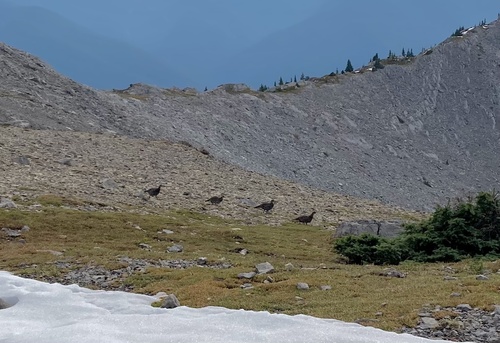
Dusky Grouse are found in mountainous regions of interior western North America, often in drier, more open montane forests. In contrast, Sooty Grouse prefer coastal rainforests and subalpine forests, often in areas with higher moisture levels.
Voice
Vocalizations differ, with Dusky Grouse producing a series of low hoots, while Sooty Grouse have a more complex series of hoots and whistles. Listening for these calls during the breeding season can aid in identification.