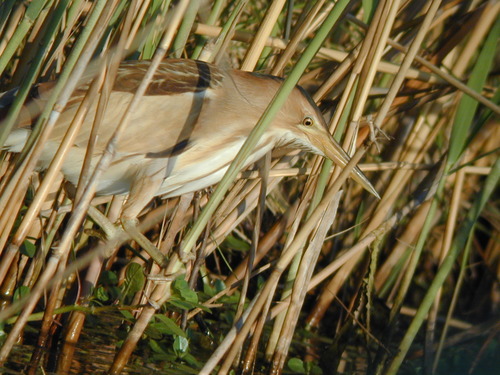
Dwarf Bittern vs Little Bittern
Botaurus sturmii versus Botaurus minutus
Play a quiz with Dwarf Bittern and Little Bittern
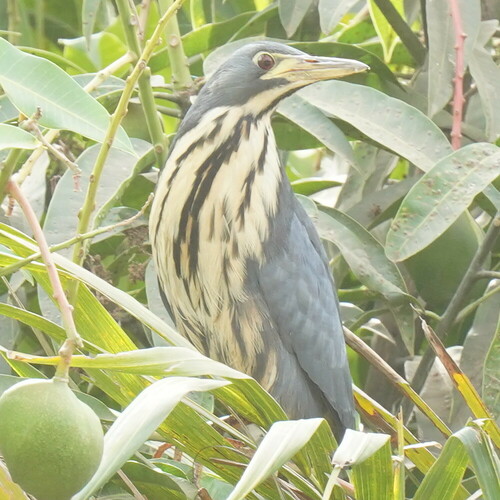
Dwarf Bittern
Little Bittern
In short
The Dwarf Bittern and Little Bittern can be tricky to differentiate, but key differences in size and plumage can help. The Dwarf Bittern is generally larger and more robust, while the Little Bittern is smaller and more delicate. Look for differences in plumage patterns and habitat preferences for more clues.
Identification tips
- Size and Structure: Note the larger size and more robust build of the Dwarf Bittern. 2. Plumage: Look for the Dwarf Bittern's uniform grayish-blue color versus the Little Bittern's contrasting buff and black pattern. 3. Habitat: Consider the habitat; Dwarf Bitterns prefer open wetlands, while Little Bitterns are found in dense reeds. 4. Behavior: Observe behavior; Little Bitterns are more likely to be seen skulking low in reeds.
Size
The Dwarf Bittern is slightly larger and more robust compared to the smaller, more delicate Little Bittern.
Plumage
Dwarf Bitterns have a more uniform dark grayish-blue plumage, while Little Bitterns display a more contrasting pattern with buff and black on the wings and back. The Little Bittern often shows a more pronounced buffy supercilium.
Behaviour
Both species are secretive and often remain hidden in dense vegetation, but the Little Bittern is more likely to be seen skulking low in reeds.
Habitat
Dwarf Bitterns are more likely to be found in open wetlands and flooded grasslands, whereas Little Bitterns prefer dense reed beds and marshy areas.
Voice
Vocalizations are not the most reliable distinguishing feature, but the Little Bittern's call is a soft, repeated 'cooing' sound, while the Dwarf Bittern's calls are less frequently heard and not well-documented.