Birdr

Eared Pitta vs Rusty-naped Pitta

Hydrornis phayrei versus Hydrornis oatesi

Play a quiz with Eared Pitta and Rusty-naped Pitta
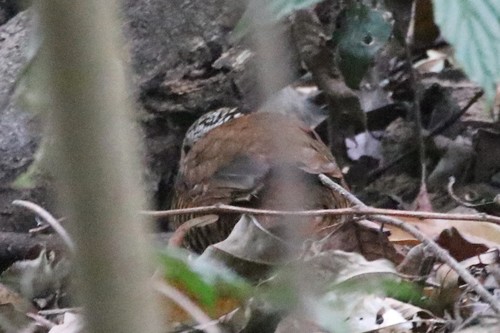
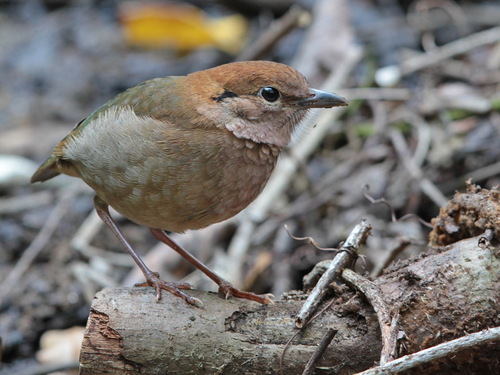
Eared Pitta (Hydrornis phayrei) Eared Pitta
Rusty-naped Pitta (Hydrornis oatesi) Rusty-naped Pitta

Media

Loading…

In short

The Eared Pitta and Rusty-naped Pitta are similar in appearance but can be distinguished by their head markings and habitat preferences. The Eared Pitta has distinctive ear tufts and is more often found in dense forest undergrowth, while the Rusty-naped Pitta lacks these tufts and prefers slightly more open forest environments.

Identification tips

Size

Both species are similar in size, typical of pittas, with no significant size difference to aid in identification.

Plumage

The Eared Pitta is notable for its ear tufts, which are absent in the Rusty-naped Pitta. The Rusty-naped Pitta has a more uniform rusty-brown coloration on the head and nape, whereas the Eared Pitta may show more contrast in its plumage.

Behaviour

Both species exhibit typical pitta behavior, often seen foraging on the forest floor. There are no significant behavioral differences noted for field identification.

Habitat

The Eared Pitta is typically found in dense, moist forest undergrowth, while the Rusty-naped Pitta prefers slightly more open forest areas. Both can be found in similar geographic regions but may occupy different microhabitats.

Voice

Vocalizations are not a primary distinguishing feature between these two species, as both have similar calls typical of pittas. Specific differences in calls are not well-documented.

Submit a better description

Use the same sections as the comparison. Your text is published immediately.

The Eared Pitta and Rusty-naped Pitta are similar in appearance but can be distinguished by their head markings and habitat preferences. The Eared Pitta has distinctive ear tufts and is more often found in dense forest undergrowth, while the Rusty-naped Pitta lacks these tufts and prefers slightly more open forest environments.

  • Look for the ear tufts on the Eared Pitta, a key distinguishing feature.
  • Note the habitat: Eared Pittas are in denser undergrowth, while Rusty-naped Pittas are in more open forests.
  • Observe the head coloration: Rusty-naped Pittas have a more uniform rusty-brown head.
  • Use vocalizations with caution, as they are not significantly different.

Both species are similar in size, typical of pittas, with no significant size difference to aid in identification.

The Eared Pitta is notable for its ear tufts, which are absent in the Rusty-naped Pitta. The Rusty-naped Pitta has a more uniform rusty-brown coloration on the head and nape, whereas the Eared Pitta may show more contrast in its plumage.

Both species exhibit typical pitta behavior, often seen foraging on the forest floor. There are no significant behavioral differences noted for field identification.

The Eared Pitta is typically found in dense, moist forest undergrowth, while the Rusty-naped Pitta prefers slightly more open forest areas. Both can be found in similar geographic regions but may occupy different microhabitats.

Vocalizations are not a primary distinguishing feature between these two species, as both have similar calls typical of pittas. Specific differences in calls are not well-documented.

Discard your changes?

You have unsaved edits. If you leave now, those changes will be lost.

Eared Pitta · Rusty-naped Pitta · My Tricky Birds