
Birdr

Eastern Black-eared Wheatear vs White-crowned Wheatear

Oenanthe melanoleuca versus Oenanthe leucopyga

Play a quiz with Eastern Black-eared Wheatear and White-crowned Wheatear
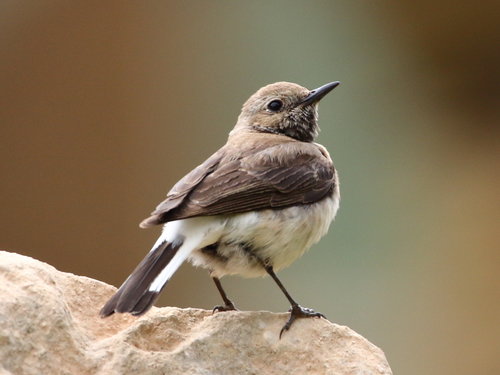
Eastern Black-eared Wheatear (Oenanthe melanoleuca) Eastern Black-eared Wheatear
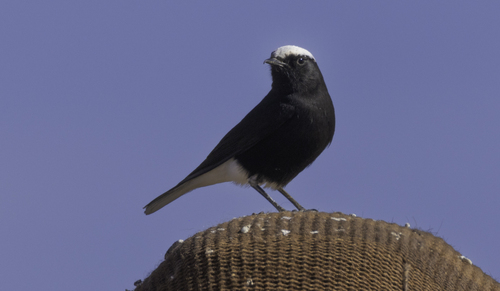
White-crowned Wheatear (Oenanthe leucopyga) White-crowned Wheatear

Media

Loading…

In short

The Eastern Black-eared Wheatear and the White-crowned Wheatear can be distinguished by their head markings and tail patterns. The Eastern Black-eared Wheatear typically has a black mask and a white crown, while the White-crowned Wheatear features a distinctive white crown and a more extensive black tail with a white base.

Identification tips

  1. Look for the white crown on the White-crowned Wheatear, which is a key distinguishing feature. 2. Check the tail pattern: the White-crowned Wheatear has a black tail with a white base, while the Eastern Black-eared Wheatear may have more varied tail markings. 3. Observe the head markings: the Eastern Black-eared Wheatear has a black mask, which can help differentiate it from the White-crowned Wheatear.

Size

Both species are similar in size, typical of wheatears, with no significant difference to note in the field.

Plumage

The Eastern Black-eared Wheatear has a black mask and a white crown, with a more varied plumage that can include buff or orange tones on the breast. The White-crowned Wheatear is characterized by its striking white crown and predominantly black plumage, with a white rump and a black tail with a white base.

Behaviour

Both species exhibit typical wheatear behavior, including perching prominently and making short flights to catch insects. No significant behavioral differences are noted.

Habitat

The Eastern Black-eared Wheatear is often found in open, rocky areas and scrublands, while the White-crowned Wheatear prefers arid, desert environments with scattered vegetation.

Voice

Vocalizations are not a primary distinguishing feature between these species, as both have similar calls typical of wheatears.

Submit a better description

Use the same sections as the comparison. Your text is published immediately.

The Eastern Black-eared Wheatear and the White-crowned Wheatear can be distinguished by their head markings and tail patterns. The Eastern Black-eared Wheatear typically has a black mask and a white crown, while the White-crowned Wheatear features a distinctive white crown and a more extensive black tail with a white base.

  1. Look for the white crown on the White-crowned Wheatear, which is a key distinguishing feature. 2. Check the tail pattern: the White-crowned Wheatear has a black tail with a white base, while the Eastern Black-eared Wheatear may have more varied tail markings. 3. Observe the head markings: the Eastern Black-eared Wheatear has a black mask, which can help differentiate it from the White-crowned Wheatear.

Both species are similar in size, typical of wheatears, with no significant difference to note in the field.

The Eastern Black-eared Wheatear has a black mask and a white crown, with a more varied plumage that can include buff or orange tones on the breast. The White-crowned Wheatear is characterized by its striking white crown and predominantly black plumage, with a white rump and a black tail with a white base.

Both species exhibit typical wheatear behavior, including perching prominently and making short flights to catch insects. No significant behavioral differences are noted.

The Eastern Black-eared Wheatear is often found in open, rocky areas and scrublands, while the White-crowned Wheatear prefers arid, desert environments with scattered vegetation.

Vocalizations are not a primary distinguishing feature between these species, as both have similar calls typical of wheatears.

Discard your changes?

You have unsaved edits. If you leave now, those changes will be lost.

Eastern Black-eared Wheatear · White-crowned Wheatear · My Tricky Birds