Birdr

Eastern Bonelli's Warbler vs Hume's Warbler

Phylloscopus orientalis versus Phylloscopus humei

Play a quiz with Eastern Bonelli's Warbler and Hume's Warbler
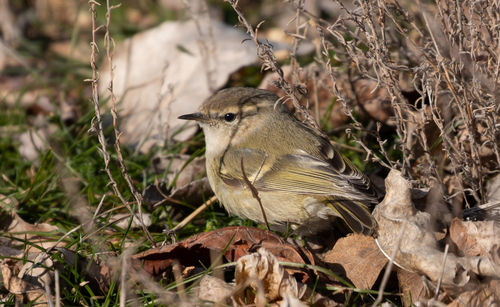
Eastern Bonelli's Warbler (Phylloscopus orientalis) Eastern Bonelli's Warbler
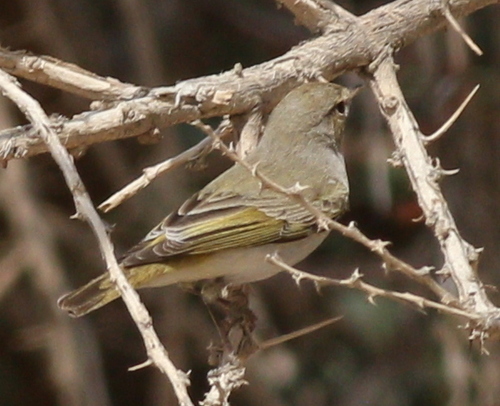
Hume's Warbler (Phylloscopus humei) Hume's Warbler

Media

Loading…

In short

Eastern Bonelli's Warbler and Hume's Warbler are both small leaf warblers with subtle differences. Key distinctions include wing pattern and vocalizations, which are crucial for identification in the field.

Identification tips

  1. Wing Pattern: Look for the wing bar; Hume's Warbler has a more pronounced wing bar. 2. Supercilium: Hume's Warbler has a more distinct supercilium. 3. Vocalizations: Listen for the song; Eastern Bonelli's is more melodic. 4. Habitat Preference: Note the habitat; Eastern Bonelli's prefers more open areas. 5. Seasonal Variation: Be aware of seasonal plumage changes, which can affect color tones.

Size

Both species are similar in size, typical of small leaf warblers.

Plumage

Eastern Bonelli's Warbler typically has a more uniform greenish upperpart and whiter underparts, while Hume's Warbler shows a more contrasting plumage with a duller greenish-brown upperpart and a more pronounced wing bar. Hume's Warbler also has a more distinct supercilium.

Behaviour

Both species exhibit similar foraging behavior, often seen actively moving through foliage.

Habitat

Both species can be found in similar habitats, including woodlands and scrubby areas, but Eastern Bonelli's Warbler prefers more open woodland.

Voice

Eastern Bonelli's Warbler has a more melodic and varied song, whereas Hume's Warbler's song is simpler and more repetitive. Calls are also distinct, with Eastern Bonelli's having a sharper 'chip' call.

Submit a better description

Use the same sections as the comparison. Your text is published immediately.

Eastern Bonelli's Warbler and Hume's Warbler are both small leaf warblers with subtle differences. Key distinctions include wing pattern and vocalizations, which are crucial for identification in the field.

  1. Wing Pattern: Look for the wing bar; Hume's Warbler has a more pronounced wing bar. 2. Supercilium: Hume's Warbler has a more distinct supercilium. 3. Vocalizations: Listen for the song; Eastern Bonelli's is more melodic. 4. Habitat Preference: Note the habitat; Eastern Bonelli's prefers more open areas. 5. Seasonal Variation: Be aware of seasonal plumage changes, which can affect color tones.

Both species are similar in size, typical of small leaf warblers.

Eastern Bonelli's Warbler typically has a more uniform greenish upperpart and whiter underparts, while Hume's Warbler shows a more contrasting plumage with a duller greenish-brown upperpart and a more pronounced wing bar. Hume's Warbler also has a more distinct supercilium.

Both species exhibit similar foraging behavior, often seen actively moving through foliage.

Both species can be found in similar habitats, including woodlands and scrubby areas, but Eastern Bonelli's Warbler prefers more open woodland.

Eastern Bonelli's Warbler has a more melodic and varied song, whereas Hume's Warbler's song is simpler and more repetitive. Calls are also distinct, with Eastern Bonelli's having a sharper 'chip' call.

Discard your changes?

You have unsaved edits. If you leave now, those changes will be lost.

Eastern Bonelli's Warbler · Hume's Warbler · My Tricky Birds